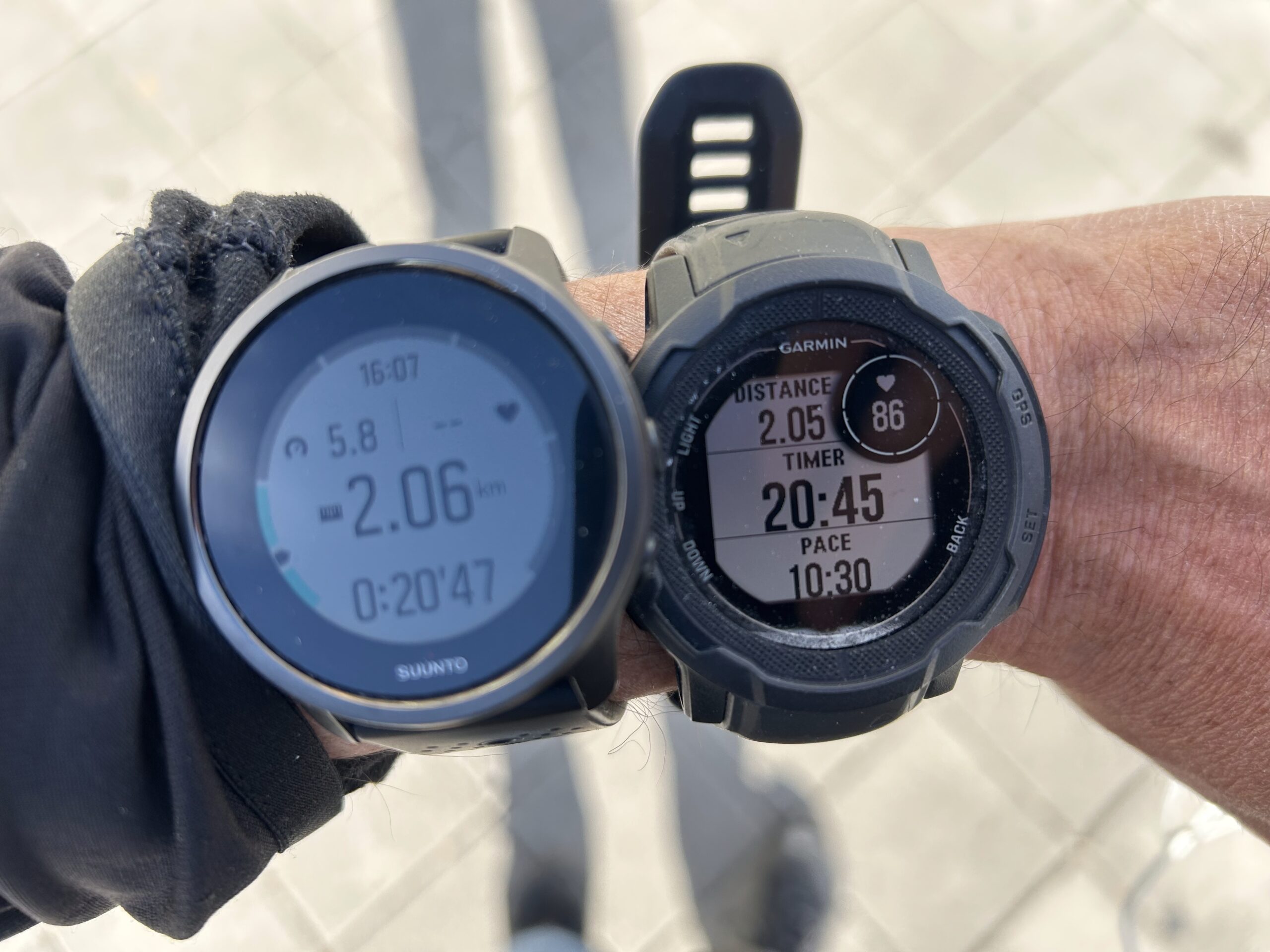
According to Coros I am optimal with my fitness routine, and I am productive with my sleep. According to Garmin I am “strained” because of bad sleep and a low HRV. Meanwhile Coros says my HRV is fine. In the meantime Apple is saying that I haven’t stood when I did.
Garmin has such a reputation for being negative that there are constant posts on social media poking fun at it. It has me questioning why Garmin is so popular. Its negativity turns me off.
I noticed that it prefers to be on the left wrist, when sleeping. On the right wrist it will almost always say that the sleep was bad, and that’s across Apple, Garmin and Coros. They do not like tracking sleep from your dominant hand.
With the Coros watch, and Apple, they go into a “sleep” mode. During the time when you are meant to sleep they prevent you from fiddling around. That’s a good feature because it allows you to interrupt sleep if you wake early. It also prevents false negatives.
Garmin likes to see that you have slept for three hours non stop before it classes sleep as sleep. This means that if you’re a polyphasic sleeper it will detect sleep 1, or sleep 2, but it won’t band both sleep segments together.
If you had too much water, too close to when you wanted to sleep, and you wake, then two or three phases will be ignored and it will tell you that your sleep was poor. You can tell it from when to when you slept. It will accept the timings. It doesn’t reassess sleep quality.
Yesterday I decided to run a test. I turned off my Apple watches for the entire day. For clarity the SE 2 is a replacement unit after the battery on the old one got to 79% health, and the second is the SEries 3 that will eventually become the sole watch, once the SE 2 becomes vintage within a few weeks.
The Apple Fitness app eventually assessed run data either from Coros or from Garmin so the only metric that is missing is “standing”. I don’t need to wear the Apple watch for these data fields to be filled, eventually.
With Suunto and Coros you get load impact and base fitness along with intensity trend, and that’s it. You can see how you’re balancing effort with recovery. With Suunto you have fitness and fatigue, to see how balanced your efforts are, as well as form to see if you’re getting fitter, staying stable, or losing fitness. You judge yourself according to these two graphs.
Garmin hides this information behind training status so you get a value judgement that leads you to think “I should rest” or “I’m strained”, rather than trusting how you feel.
Some people see at as a même or as a joke but when a device tells me that I slept badly for an entire summer, and when a device tells me that my HRV is low it encourages me to leave the platform.
You buy a watch like the Garmin 570, for running, replacing the Garmin Instinct 2, because it is better suited to running, but every morning you get negative feedback, for the entire summer.
With the wrong software a premium device becomes a tedium device.
Leave a Reply