Table of Contents
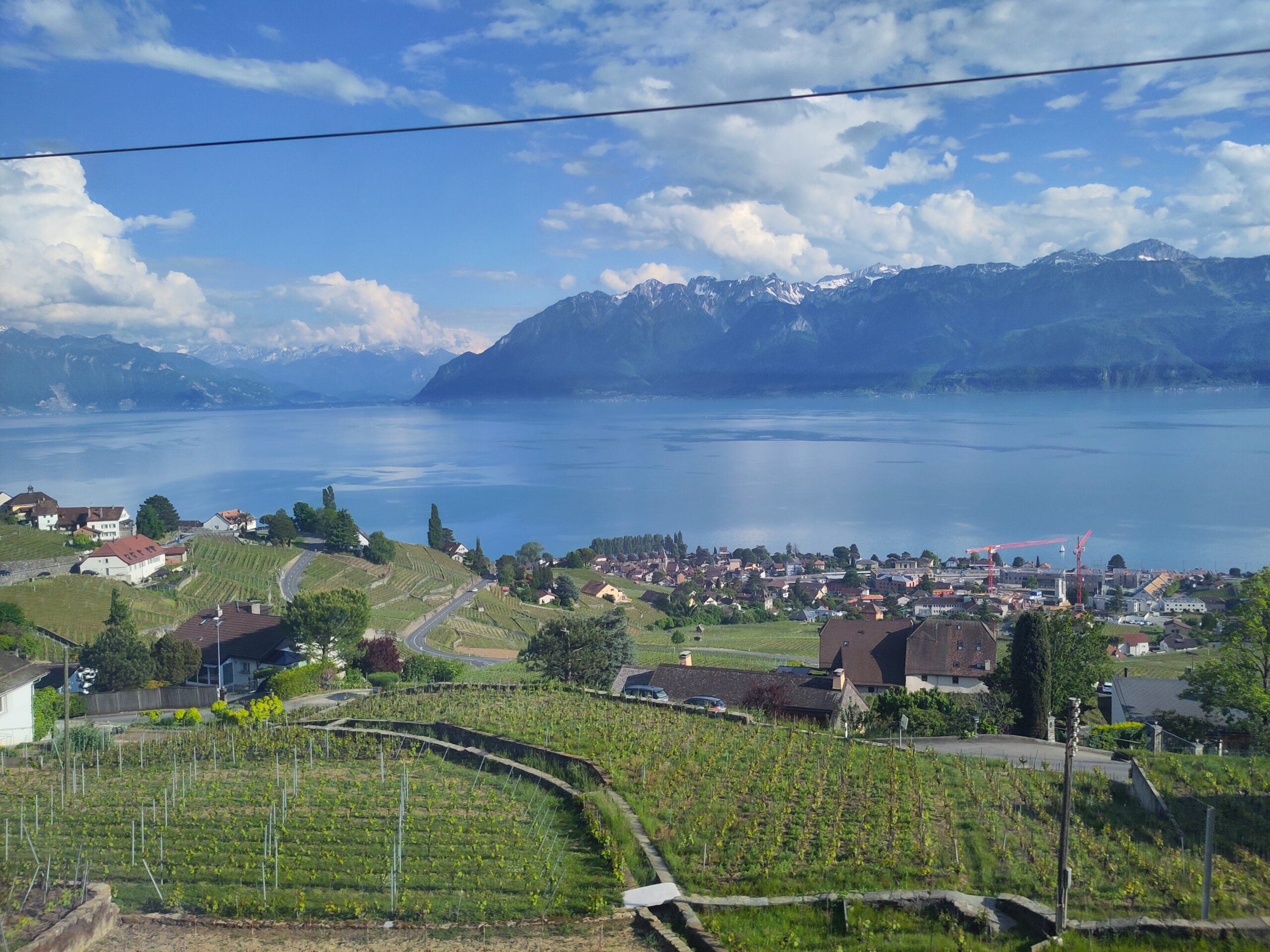
This morning Runna wanted me to do some hill training. As I live near Luins I decided that I would use some proper hills, rather than theoretical ones. In anticipation of this workout I chose RPE in the Runna app on the phone. I was sadly disappointed to find that RPE is not supported on the Apple Watch.
Ordinarily hill training, with the Apple watch, is about running at a certain pace, and then running at a faster pace, and then a faster pace. The issue is that when you’re running up a ten percent gradient, or running down an 18 percent gradient, that advice is exhausting and dangerous. It’s exhausting to run up a vineyard road at a 05:45 pace, but it’s also dangerous to run down an 18 percent gradient on shoes that don’t have enough grip.
The result is that the watch app nags you to speed up, but if you speed up you’re running at 05:45 on a ten or more percent gradient, which the normalised grade would result in it being a 04:30 pace on the flat, i.e. “You were running too fast.” What makes this all the more damning is that the app offers the option on the phone, but not on the watch, where it would matter. It’s up to us to assess the effort.
Insult to injury, luckily just metaphorical, is that when you get to analysing the workout on the phone, in the app it says “You were not good at keeping to the instructions, please do better”, at which point I want to say “We are not all running in London where you climb 20m over 100 kilometres. We’re in Switzerland where you climb 200m in 8km. If at least at the digestion part the app used NPG, then we’d get useful analytics.
This isn’t the first time I encounter this frustration. I have encountered it at least three times with Runna. Runna doesn’t play nicely with runs that are not somewhere flat. It’s as if the only good place for Runna is a running track or a course that is flat.
The issue is that hill repeats, by their very nature, are better on actual hills, because on actual hills you use the actual muscles that you use for climbing and descending. If I run imagined hills then I’m just interval training, rather than hill training.
I ignored the guidance as it was absurd to follow it, but in so doing I expected for the app to tell me off. I also questioned why we pay a premium for an app that is not adapted to our running environment. Today’s experience got me to switch back to Suunto only. Runna is not useful in this landscape.
When the grade was slightly more forgiving I could respect the times, but on two climbs I had to eventually walk because I had little energy to keep running at such a pace.
The Price of Optimism
In reality, I planned such a route because I wanted to play with Relative Perceived effort. I thought that by running in such a landscape based on zones, like you can do with cycling, then I would derive an interesting new experience. That’s why I chose such a vertical place to run. If I had known about the software’s limits I would have stuck to a flatter landscape, although, through running such a challenging course, I did gain real hill experience.
A Nice course
I will run this route again, and it has two advantages. The first is a parking and the second is a tea-room/épicerie, so if you plan to run this route, you can stop for croissants, and coffee, once you’re done. Oh, and one more thing. We very often cycle along through the vineyards and see people running in the area. Originally I had considered Lavaux but I think practicing here a few times will make Lavaux more worthwhile.
Leave a Reply