Environmentalism and Traffic Lights
When you’re driving from Nyon to the airport without traffic the journey takes about twenty minutes. If you decide to drive into the city of Geneva that journey time is doubled thanks in main part to traffic lights. It once took me over one hour when scuba diving in Hermance to drive from Place des Nations to the other side of the Mont Blanc Bridge. That’s over one hour for less than two kilometres. That idea cooled down my motivation to dive in Hermance. At the time I was driving a petrol rather than a diesel car. Yesterday I was driving from the foot of the Jura to Cornavin and the drive from the foot of the Jura to Geneva was fast. It’s when you drive from the motorway to the centre that you lose time. 23 minutes to drive 3.8km. I don’t have a start/stop car so when I’m spending 23 minutes at traffic lights the engine is running and polluting the air for nothing. There is no gain from blocking traffic lights. It was even worse when I was on Rue Montbrillant. The GPS indicated 15 minutes to travel about 750 metres. Can you imagine the carbon footprint of traffic lights? That’s 15 minutes of nitrous oxide that had no need to be sent into the air. Imagine the health impact of keeping vehicles trapped at traffic lights. Within 30 seconds I went right and parked at Place des Nations and walked the last 750 metres. I wasn’t going to waste 15 minutes because “environmentalists” decided that the best way to discourage people from driving was for them to sit in traffic and pollute the air. When I was working on Rue Montbrillant I was taking the train to and from Geneva every day and I used an abonnement de route to reduce cost. It works well until you’re reliant on bus schedules. Some routes have one bus an hour. This means that a 30-40 minute drive becomes a one and a half hour public transport route. If you finish your day at 1800 you’d arrive home by around 1930-2000. This means that although you’re taking the environmentally friendly option you’re spending two and a half hours a day to commute. During warmer months and drier days, the scooter was a good alternative. Within minutes you’re on the train to Geneva. That’s the paradox of environmentalism. You want people to be environmentally conscious and you want them to minimise car use but rather than provide them with time efficient solutions to encourage them to take public transport you trap them at traffic lights. Waze, Tomtom and other GPS manufacturers should take the heat maps we generate with our mobile devices every time we drive and design public transport infrastructures to replace the need for cars. This data is already available. Below are two heat maps of cycling around London and Switzerland. If you used the same type of data from cars you could design a system that replaces the need for cars. When you live in a city you see two kilometres as a big distance to drive but when you’re in the countryside 2km is nothing. London on a bike feels tiny after walking and taking public transport. In Geneva it’s not that you have much traffic. It’s that the traffic lights give the illusion of traffic. Most of the side streets are empty of traffic most of the time. [caption id=“attachment_3570” align=“aligncenter” width=“1024”]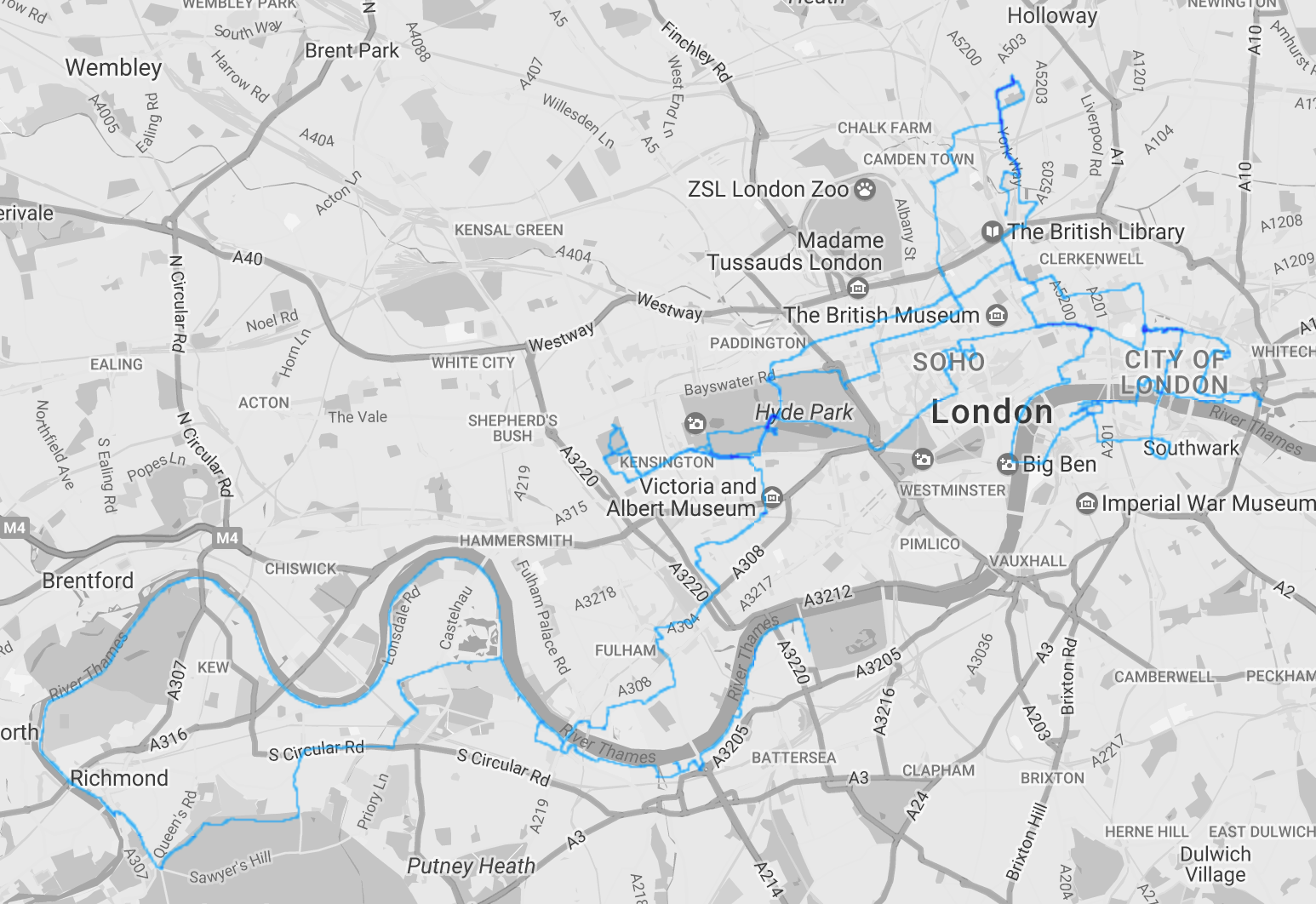 Distances in London are shrunk by bike. I think it’s the best form of transport, when the weather is favourable.[/caption] This week I wanted to cycle in to Geneva for my lunch time meetings but chose not to because the bike ride is energetic enough without the weight of a 15inch laptop on your back. I did buy a bluetooth keyboard for the mobile phone as a mac book air replacement. That should make cycling more pleasant. I also have spare tires in case I get a puncture. [caption id=“attachment_3571” align=“aligncenter” width=“1024”]
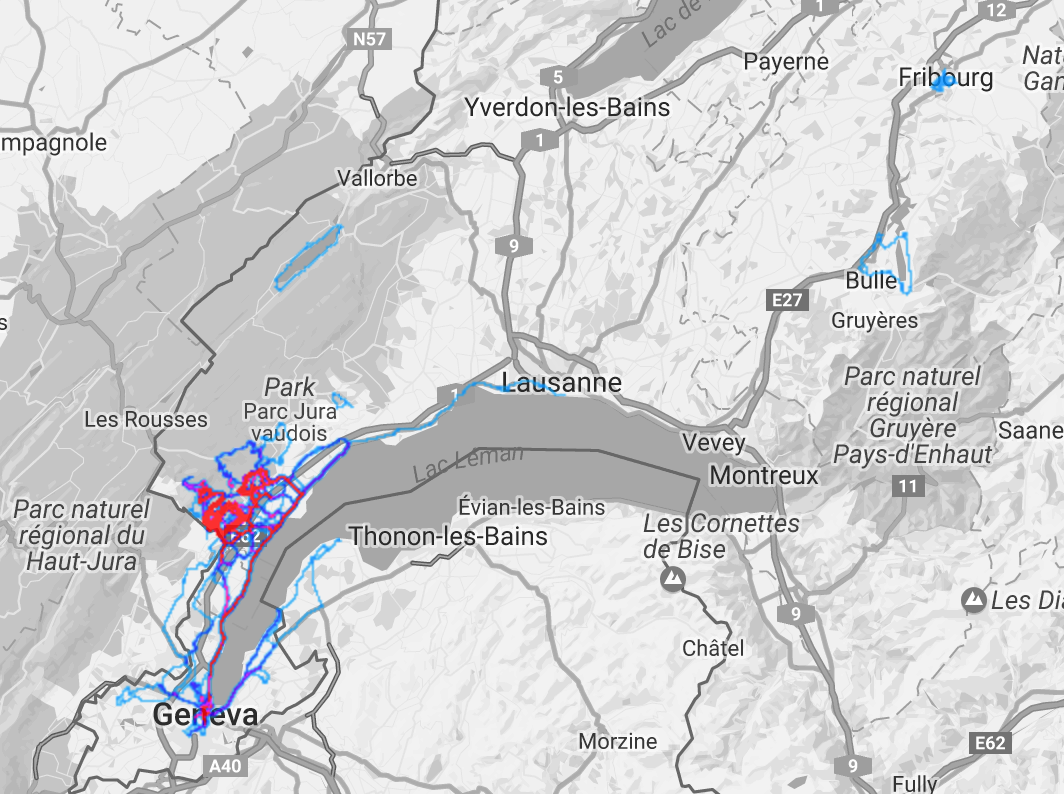 Cycling in Switzerland and France[/caption] Geneva’s traffic light policy did work on me. Several years ago I became so tired of waiting at traffic lights when driving into and out of Geneva that I stopped going. Instead of meeting people in Geneva I drove to various lakes to scuba dive and to the mountains to climb, hike, cycle and do other more environmentally friendly activities. This is especially true when we drive other participants. When I climb Fort L’écluse I meet people at CERN and when I meet people to go to Swiss VF I meet them at the Nyon train station, Fourmi metro stations or even the Lavaux motorway stop.