Environmental

Shark Reporting.

In the age of drones this is how shark reporting should be done. The Coast guard or local surfing schools should fly a drone around and check to see whether there are any sharks present. If and when they spot a shark or groups of sharks they could temporarily close the beach until the threat is gone. It reduces the need for shark nets. It also reduces the need and desire to kill any shark that is spotted as people are informed ahead of this time. The report tells us that the sharks in the video are juveniles and that the reason for which they are on this section of beach might be linked to a dead whale floating “about eight miles away in that direction”. There is no sensationalism. We are given the facts. The report then tells people that if they do want to swim or surf and be safe they should stay near the lifeguard tower. When a whale dies it provides sharks with enough food for days or even weeks. It provides them with food until it looses buoyancy and sinks to the bottom of the sea where crabs and eels eat the remains. I’m sharing the second video because we see divers photographing and filming sharks as they eat a whale carcass. We see how close they get without any difficulties. There are a number of interesting documentaries to learn more about sharks and I recommend watching Sharkwater because it shows that rather than sharks being a threat to us it is us that are a threat to sharks. By taking a calm and rational approach to sharks we are helping preserve the ecosystem. By learning to cohabit with these animals we are allowing future generations a chance to see these animals. With today’s technology we can monitor risk, especially on calm and clear days.
Dirty Gold War screening at the Graduate Institute.

I went to watch Dirty Gold War at the Graduate Institute at lunch time today. The film is interesting because it makes you think about the environmental impact of gold mining. We’re familiar with the stories of gold mines in South Africa. We’re familiar with the stories of the gold rush. We don’t often think of the environmental impact of Gold mining in rain forests in Latin America. This documentary introduces the topic well. It brings our attention to the fact that when people buy luxury products like gold watches, bracelets and other objects they are buying objects that have no environmental or ethical credentials. It leads us to question when the luxury industries will be accountable to such considerations. Mobile Phones, laptops, televisions and other devices all contain traces of gold. If that gold is sourced from environmentally unfriendly sources then we are contributing to the destruction of the rainforests and the poisoning of ecosystems. Fairphone and other companies with such goals benefit from such documentaries because we are shown why their goals are so important. It contextualises their mission and their reason for being. It also helps to put pressure on all electronics manufacturers to do more to reduce their impact on the environment. Dirty Gold is a topic that does not get much attention. As I reach the conclusion of this blog post I find that Dirty gold points to a music album rather than gold mining. We need to raise awareness of this topic. People are wearing wedding wings, luxury products and using electronic devices that are in part for the degradation of the environment. As awareness of these issues grows so companies like Apple, Sony and others should work to ensure a clean product line, from raw material in the ground to the finished product.

What is There to See in the Lake

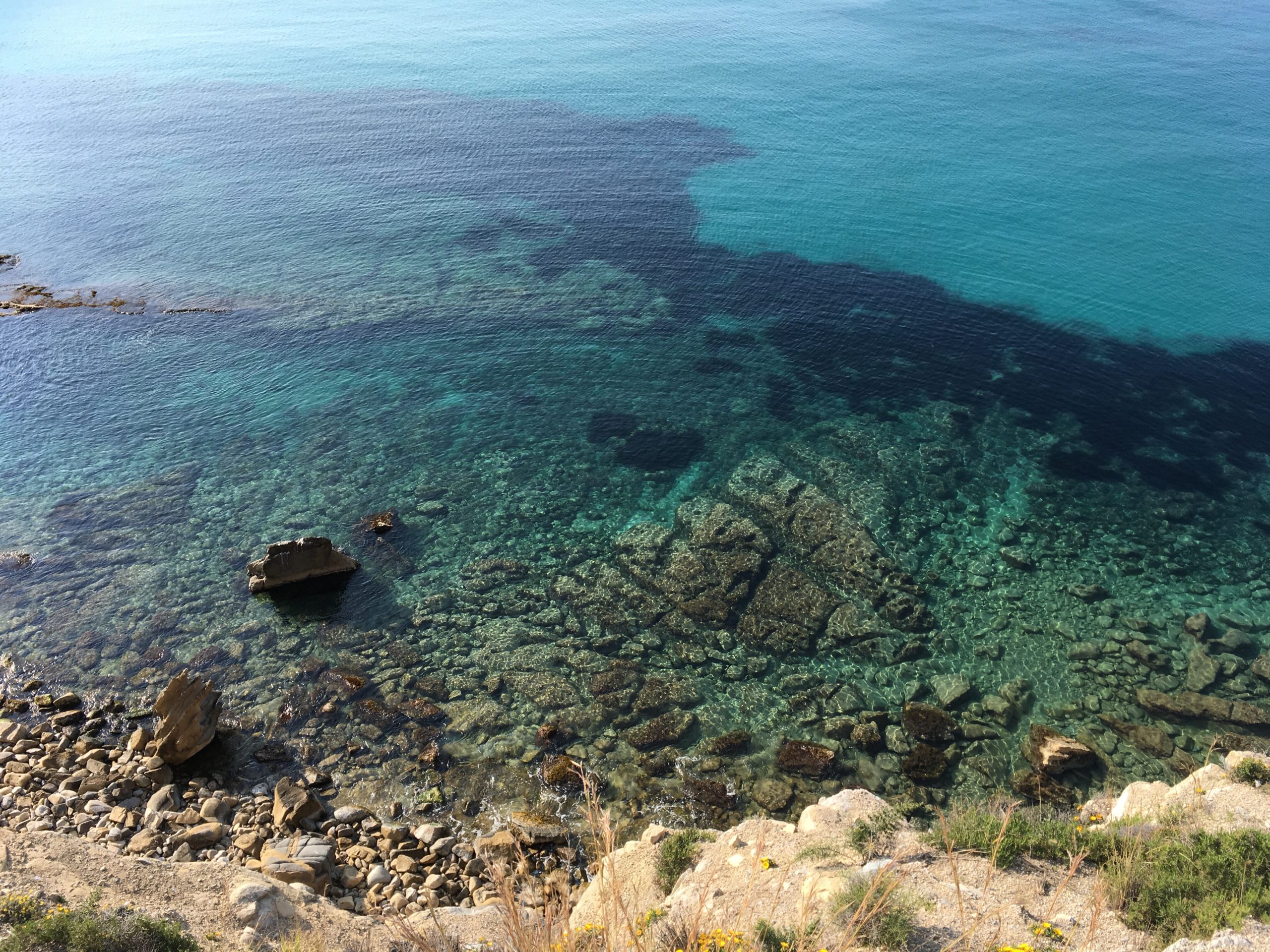
What is there to see in the lake is a question that people have frequently asked me. For at least two years I would go diving nearly every weekend. I would dive in the Lac Léman, the Lac de Bourget, the Gouille Du Duzillet. I also dived the English channel in November. I dived all year round. In summer we would cook in our dry suits and in winter our hands were sometimes so cold that we couldn’t take off our dry suits. Lake divers are an eccentric, hardy bunch of people. I used to say that the beauty of lake diving is that it is not affected by weather. You’ll get wet anyway and if you go below a certain depth water is always at 5°c. I’m in Spain at the moment and I decided to go snorkelling with my semi Dry Suit around El Portet. This is the cove where I worked on getting my rescue diver certification. I snorkelled by the rocks to the west at first. The waters are shallow and I did see a school of juvenile fish. As I finned further I saw some slightly larger fish and urchins. After a while of searching I finned to the other side of the bay. New sand has been deposited along this beach. As a result of this new sand visibility has suffered near the beach. By the rocks the visibility is still good. From the image above you can see that the water is really clear. I thought that with such clear waters I would see a lot. I was hoping to see fish, maybe an eel or two and maybe some crabs. It’s good to dive and snorkel close to marine reserves. In marine reserves fish are allowed to mature and grow and eventually they branch out to other areas. As a result diving and snorkeling are more rewarding. It’s at the supermarket fish section that I saw the most fish. It’s a shame that they were lying dead, on ice, rather than swimming underwater. In effect I see as many fish in the mediterranean as in the lakes of Switzerland and France so you travel for the climate rather than aquatic life. People need to allow the seas and oceans time to recover. It’s a shame not to see much aquatic life. I should try again in a different location where there are fewer people. I might be luckier.

Learning about Tiny Houses

Learning about Tiny Houses is interesting. There are a number of features/documentaries online where people build their own tinyhouses either from shipping containers, trailers or other structures. The aim of these tinyhouses is to maximise space and reduce costs. Some of these homes are entirely off the grid. They collect rain water and solar panels provide power. The bedroom is often built above the kitchen and climbing wall holds are used instead of ladders or conventional stairs. One home folds out from a truck to become a castle. One tower serves as a toilet and the second one serves as a shower. The space above even features a bath. Another Tiny home is designed as a tree house providing a beautiful 360° panoramic view of the landscape around. This tiny home is interesting because it’s built out of half a shipping container. For a change the bed is below and the living room is above. The kitchen and office are next to it and there is a shower from which to watch birds. I have seen a lot of people speak about minimalist living, living off the grid and living out of cars, campers and other vehicles. By watching videos about tiny houses you begin to understand that there are certain basics that you need to have and that these basics fit in to small spaces. If you have a van, a caravan or other vehicle then you can live as comfortably as these people. This last video would make for a perfect summer home for recent university graduates or high school graduates. It’s small, light and mobile. You’re self sufficient to a great extent and as long as it’s warm you have your own space. It’s amusing that in at least three videos we hear about people learning to be neater through living in such small spaces. As a scuba diver, rock climber, cyclist and geek the biggest challenge for someone like me would be to find a place where I could store my diving gear and especially the scuba tanks. They’re bulky. Diving gear also needs to dry properly to avoid the smell of the lake (as I used to dive weekly in the lake). My view of living in a tinyhouse has changed through the watching of these documentaries. It shows you that what you want is functionality rather than size. You want “gadgets” as these maximise how you use available space.

A Rock Crawler and Wildlife Film Making

When Gordon Buchanan was following bears in the United States we watched the resulting documentaries on television. We have seen him a number of times in episodes of countryfile as well. Now he is working on getting footage of wolves in the wild. For this project he is staying out in the wild and following a pack of wolves day after day for weeks. As part of this project he is filming with a broadcast camera and gopro cameras which he fixed on to a “rock crawler”. The Rock crawler is a remote control car with the body removed. The BBC were working on a documentary about polar bears and for certain shots they created a den for filming purposes. It helped to tell the story but people felt that the purity of that documentary had been tainted. This genre of documentary aims to tell a genuine story with no reconstruction or trickery. Everything has to be genuine. As we see from the footage above Gordon Buchanan was able to get the camera right up to the den and film the wolf cubs from the mouth of the den. This technology is great for story telling because it provides the camera operator with greater flexibility. He is able to get the camera to where he wants it to be without going there in person. In theory animal behaviour is genuine.

Flowing water - a visual experiment

Flowing Water - A visual experiment is a simple one minute video. The first images were filmed at the Arboretum in the Jura and the timelapses show clouds playing above the Jura near La Dôle. La Dôle is where the doppler radar is located. That radar shows rainfall and precipitation so that air traffic controllers can advise pilots of weather conditions. With the amount of rain that has fallen over the last six or more weeks every river is full of water. As a result of this they are flowing fast and debris can be seen. When rivers flow fast they are fun to watch. The next step would be to capture waterfalls over a period of minutes or hours. If we stopped recording just as the rain stopped we might get interesting results. The peak wouldn’t appear until soon after the rain stopped. I was lucky with these clouds because they moved quickly from one side of the screen to the other. They also formed and dispersed quickly. As a result I could set the interval to take images every few seconds. I could quickly see the result and adjust. When I filmed the clouds I filmed the ground and the trees as they came in and out of the shadow of clouds, I filmed a tighter shot where you could see the transmission mast and then I pointed to the sky and tried to capture the movement of clouds with blue sky as a backdrop. Some moments are fun to watch.

Watching clouds form as a 360 timelapse

Time-lapse videos are fun because we can see something happen faster or slower than real time. By watching this content we gain a better understanding of the world and how it works. For years I have been filming time-lapses and the results can be fun. In some cases we record time-lapses with video cameras and at other times we set an interval timer to take pictures every so many seconds. In this post you will be watching clouds form as a 360 timelapse. I have chosen to share both the flat image and the spherical image. The reason for sharing both versions is to give you an overview of how objects move in both.

Sharkwater - a documentary worth watching

Sharkwater - A documentary worth watching. If you have one and a half hours of free time I recommend watching this documentary. It discusses the anti-whaling work by the Sea Shepherd, the work it did to combat long lining around the Galapagos and it touches on the shark finning mafia and corruption. The documentary also looks at the public perception of sharks. It shows that they are not the dangerous animal that they were thought to be until recent history. The film ends with a shot of the narrator free-diving with sharks and being perfectly relaxed. At one point he says “sharks are so sensitive that they can feel your heart beat, if you are calm they will stay but if you panic they will flee”. I paraphrased his exact words. Another theme that is explored in this documentary is the food chain. He mentions that plankton absorb a lot of Carbon dioxide and that with the overfishing of sharks the ecological balance will be ruined as the apex predators are lost. He pushes strongly for the conservation of shark numbers. We are familiar with the current Save our Sharks movement. This is an interesting investigative documentary about the economy surrounding shark finning and why it has a negative impact on the food chain. If the documentary was updated it could look at the economic viability of shark tourism that has grown in recent years. Sharks, in some places are more valuable alive than dead. If you don’t have time to watch the entire documentary then I recommend that you watch the last thirty to fourty minutes.

Childhood and environmental conscience in Switzerland

I attended the Green Cross International event in Geneva and took pages and pages of notes. There was a lot of information and a focus to provide COP21 in Paris with a message from Geneva, Humanitarian city to Paris and the leaders present for that conference. Dr. Somthai Wongcharoen – Founder, Wongpanit Group of Companies (Thailand) made a speech about the company he started in 1976. He saw waste not as a problem but as a resource. Through encouraging people to bring their rubbish and paying for it, by establishing recycling centres around the world he helped turn waste in to commodities. During his presentation the topics he covered were familiar. That’s because in Switzerland PET plastic has been recycled for 25 years, a quarter of a century. It is an inherent part of my character that I will recycle plastic bottles whenever I can. Recycling culture in my village is strong. For several years now we have had a recycling centre rather than a dump. Aluminium, PET plastic, other plastics, paper, and cardboard are all recycled. So is garden rubbish. The amount of rubbish that heads to an incinerator is now a third of a bag every three weeks. In other words I drive to the recycling centre and drop off recycling in the appropriate places and the waste that heads to an incinerator is minimal. This is such an ordinary part of my life, as a person living in the Canton de Vaud that I feel bad about throwing away rubbish in garbage bags rather than sorting it. Recycling is easy. I started as a child and continued as an adult. It is nice that it has become such an important part of village life. It seems funny that just 20 minutes from where I live recycling culture is so much weaker. I’m thinking of Geneva. In Geneva people still treat rubbish the old fashioned way. They don’t sort it. This is an abberation and I hope and want Geneva to follow suit. I want to see more places like we see in Geneva train station. In the train station you can sort your rubbish by PET, Paper, Aluminium or other. This is a fantastic initiative by the CFF and needs to spread to conference centres, places of employment and more. If you sell aluminium cans or plastic bottles you should offer a place to recycle these resources. I will leave you this video to show how waste management can be seen as resource management.