Cycling

The High Tech World is not making us weak and weird.

The High Tech world is not making us weak and weird. I believe that the opposite is true. According to Patrick Mustain in his article “Welcome to the Devolution: The High-Tech World Is Making Us Weak and Weird” for The Daily Beast he worries that modern technology and conveniences have taken the physical aspects out of our daily routine. We don’t need to clean clothes by beating them against a rock and we no longer need to clean dishes manually. We take the car from point A to point B and we take a lift to go up a floor or two.

StravistiX for Strava

StravistiX for Strava

Stravistix for strava is a Chrome plugin. It allows you to analyse the data from your ride in more detail and with more graphs. In the detailed view you can see heart rate information, speed, power, grade, elevation and  ascent speed. It allows you to see each metric in more depth. It allows you to look at your statistics in detail. You can see what percentage of the ride was flat, uphill or downhill. You can see how fast you were climbing and how your speed varies. [gallery columns=“4” ids=“2707,2708,2709,2710,2711,2712,2713”] This breadth of data is fun to play with. It allows you to see whether you do spend as much time as you thought climbing. It also allows you to see how much of your time was spent static or moving. There is a weather module for wind, temperature, clouds and humidity. This is a nice way of checking whether the wind is favourable to the ride you are thinking of doing that day. What I would like to see next is a log of the weather and especially wind during the ride. It would like to see ground speed in contrast to wind speed. This data should be relatively easy to acquire. Plugins are great because they allow you to do more with the data that you or other people generate. They allow weekend and professional riders to analyse how they are progressing. It also allows riders to compare themselves with others.

Cycling in Winter

After cycling over 1100 kilometres in 2015, I aim to cycle 1200 kilometres in 2016. This goal is an easy one to achieve. It’s the 21st of January and I already have 100 kilometres logged. The weather over the last three weeks has been cold and wet. We have had rain almost every day and it recently turned to snow. As there is a lack of good weather there is no choice but to go out in the bad weather. Cycling in these conditions is messy. Your clothes get soaked from the rain and as I cycle in the countryside I come home covered in mud. When I get home I change into dry clothes and I recover quickly. Rain is easy to deal with once you’re ready to feel wet and dress for the cold. What is more challenging is cycling on slick tires on snow. Some of the roads I cycle on are salted and cleared but as I also use agricultural roads they are covered in snow. Safety takes focus and concentration. The rear wheel skids if you apply too much force to the pedal and the bike can skew if you are not careful. Cycling in such conditions is not ideal. It demands resistance to the cold, stamina to continue making the effort and determination to set an achievable goal. I will continue towards 200 kilometres by the end of February. Cycling consistently now will make summer all the more pleasant and rewarding.

E-bikes, autumn and the changing seasons.

One evening this week I was walking in the countryside at the foot of the Jura enjoying the evening when I walked by a couple. They were sitting on a bench looking across some fields towards the Mont Blanc, the Alps and of course the Lac Léman. Leaning against the bench were two e-bikes with good suspension. It made me think about retirement and free time. It encouraged me to think about the freedom and pleasure of exploring the landscape on a bike without having to make the same effort as if you were on a conventional bike. I thought of the range it would offer and the gradients you could climb. It would in essence give you the freedom of a car with the practicality of a bike. Of course there is a barrier to enjoying this pass time and that is the price of these bikes. In Switzerland they cost as much as a scooter. They lack the range and flexibility though. Electric bikes, in relation to road bikes are in fact cheap. [caption id=“attachment_2551” align=“aligncenter” width=“484”]Enjoy some freedom, swap your car for a bike for two weeks Enjoy some freedom, swap your car for a bike for two weeks[/caption] I already alternate between a car, a scooter and a bike and with the change in weather I prefer the comfort of the car or the speed of a scooter. If it’s raining then I would much prefer to use the car. It is a shame that they have this promotion at the end of the pleasant season. If they had this promotion at the beginning of summer then I would have taken advantage of it. I will take this option if they offer it next year.

Fribourg was liberated by Fribourg, Lausanne and Geneva Ingress resistance fighters

This weekend teams of Resistance Ingress agents from Fribourg, Lausanne and Geneva met in Fribourg to neutralise and capture all Enlightened portals. Some teams were on foot to liberate portals from the centre of the city. I was with the bike team and we took care of liberating all of the portals on the outskirts. It involved cycling up and down hills, a thunderstorm and being rained on. I really enjoyed being part of the cycling team. It’s a fantastic way to get around and it’s a good way of seeing a big portion of unfamiliar cities with a minimum of effort. My team members were on electric bikes and I was on a mountain bike. This was great for me. I had to work hard to keep up with them. This was a good workout. There were moments where I generated up to an estimated 1300 watts of power for very short bursts and got the fifth best time on a segment. I enjoyed this experience so much that I would love to do this again in other cities around here. Cycling gave me a workout and playing Ingress gave me time to recover. It seems that if you’re creating fields having a bike is ideal. You can get almost anywhere from anywhere within a city within minutes with a minimum of effort. By car this would be dangerous and impractical and on foot it would be slow and impractical.

The Bulle Slowup

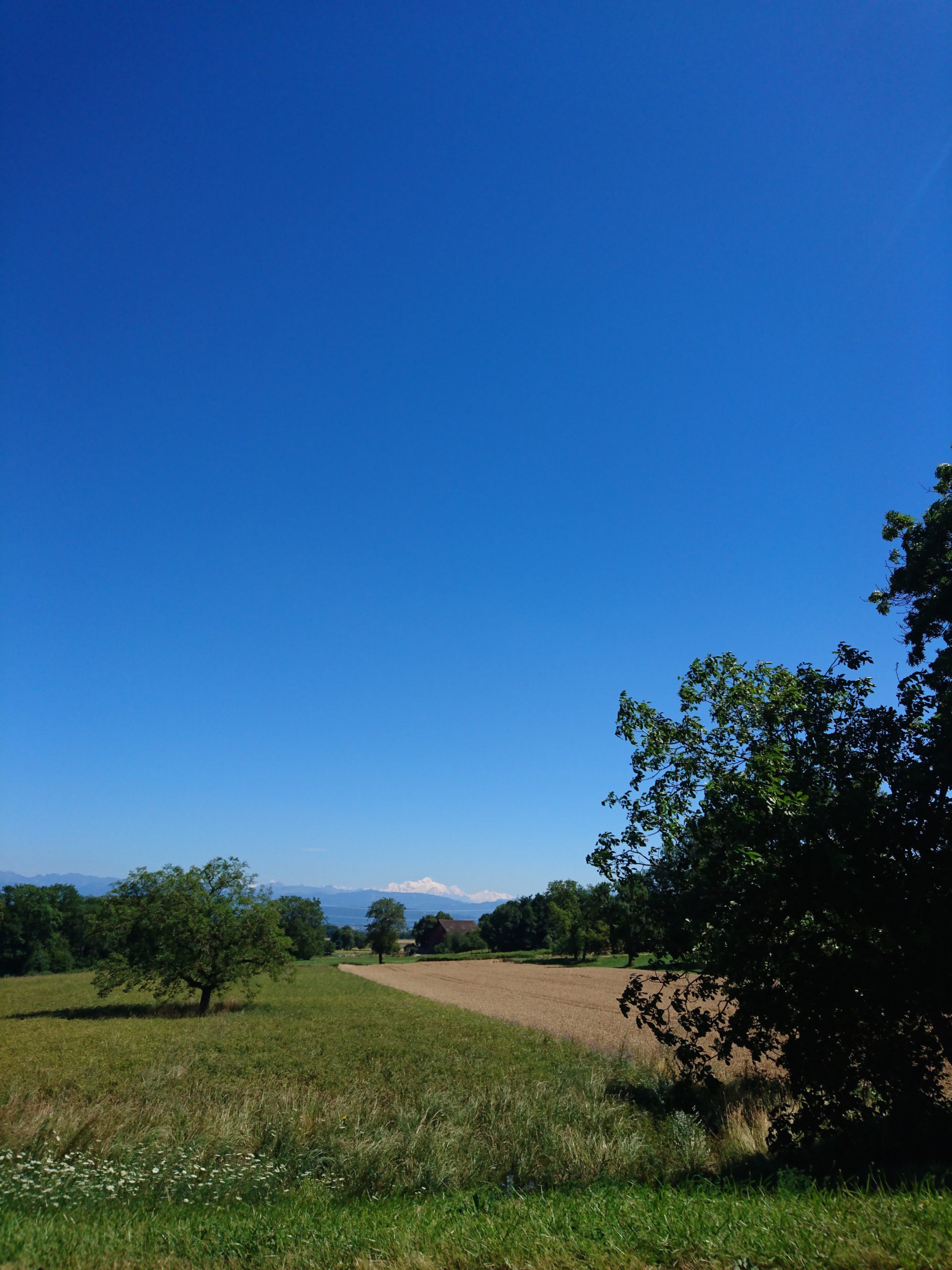
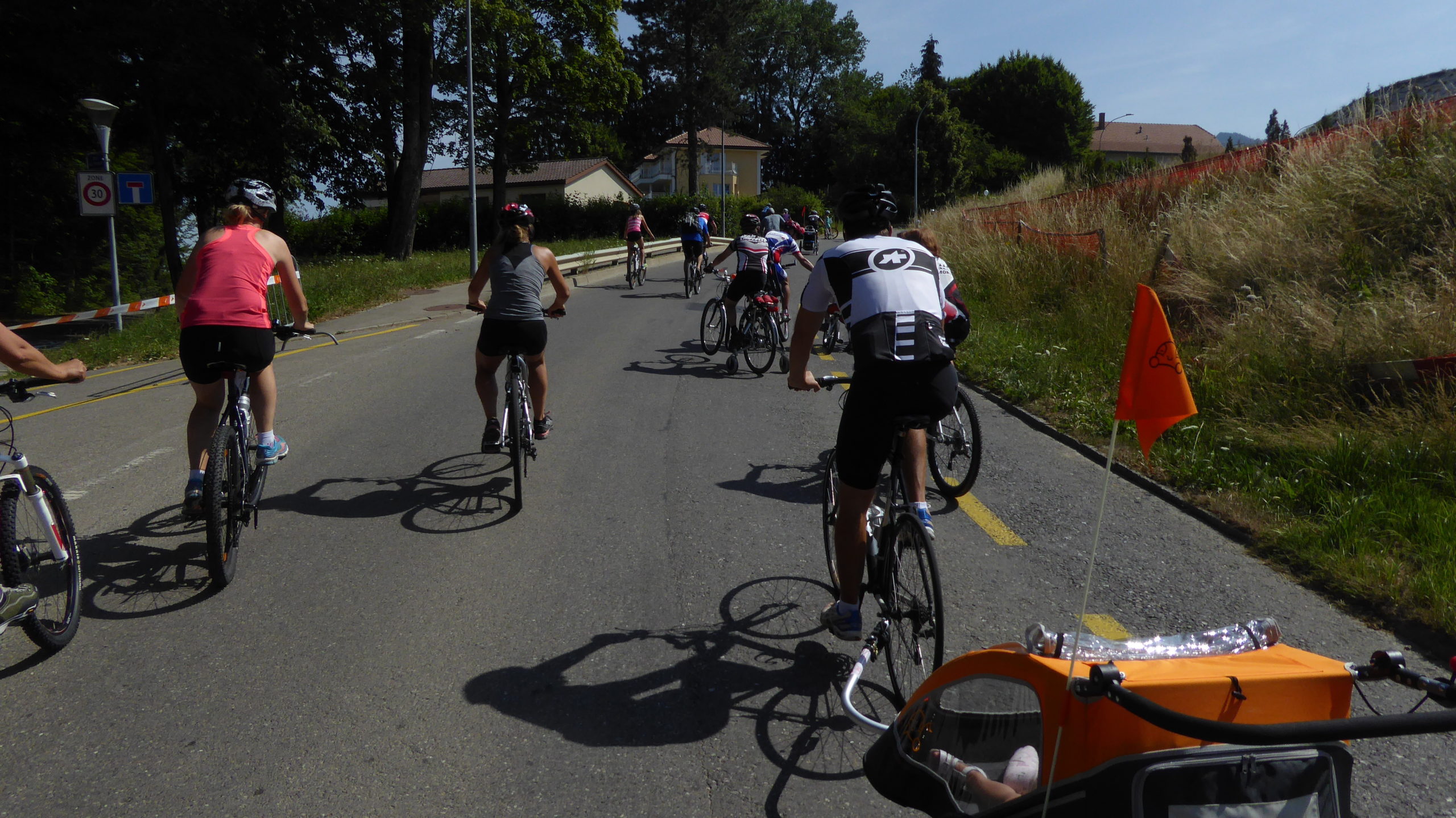
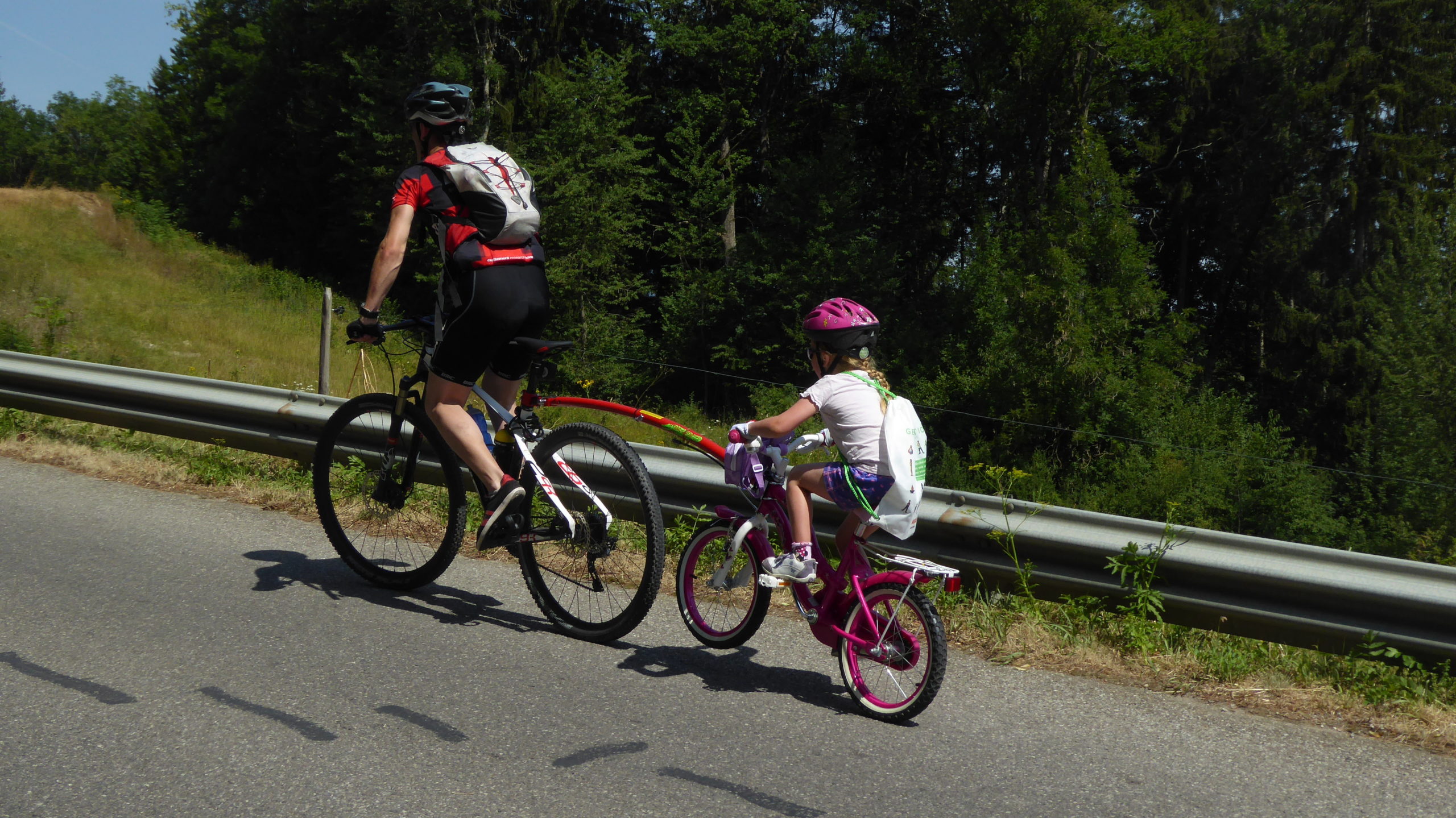
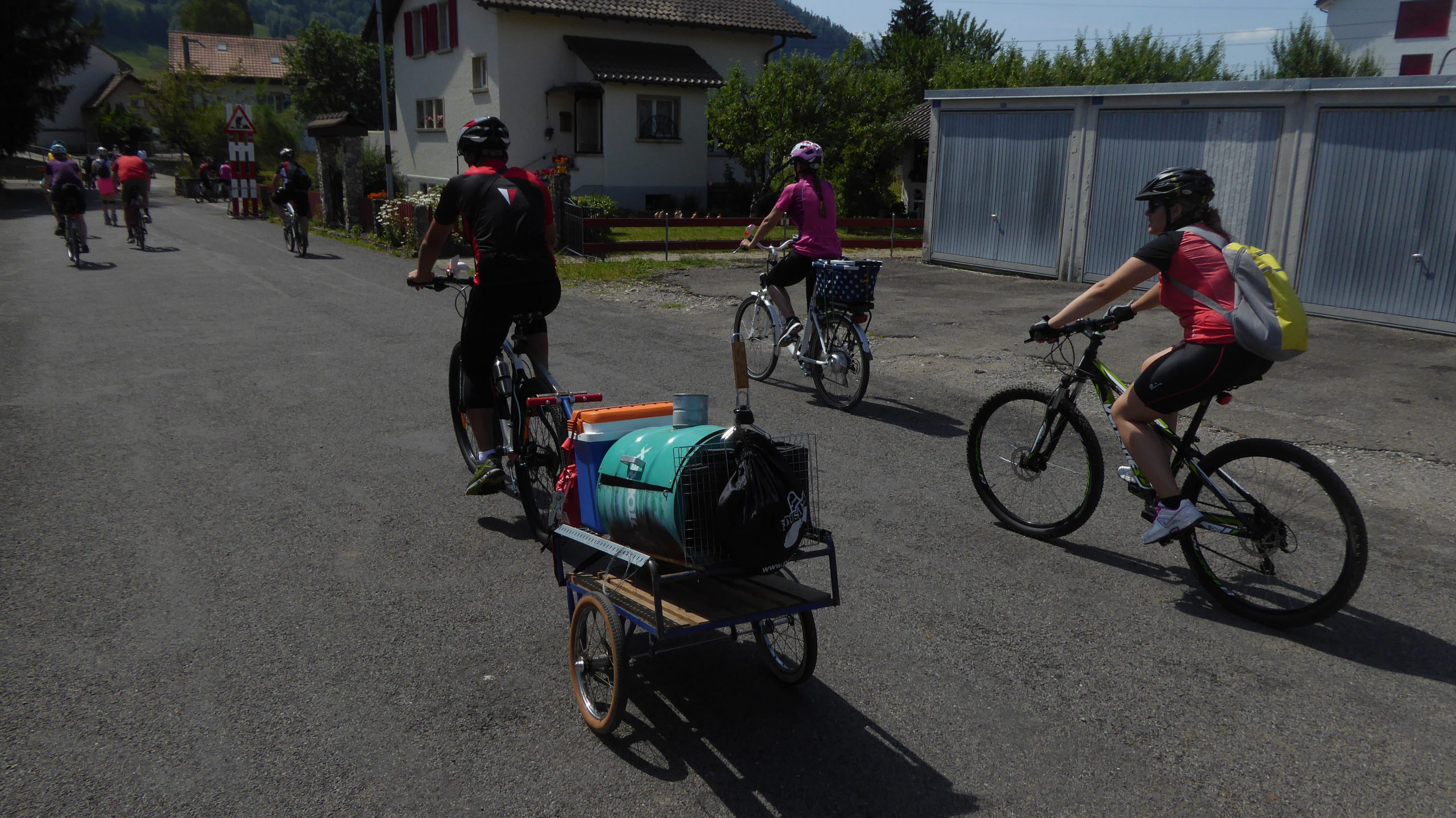
Bulle is a city by a lake in the Canton De Gruyère in Switzerland. Last weekend they held their annual slowup event. A slowup is an event where roads are closed to motorised transport in favour of cyclists, roller bladers, skate boarders and other self propelling sports. The loop is around 26km long and there are ares to stop and enjoy food every few kilometres. At this event you can also get your bike maintained for free except for parts that need replacing. It’s a great opportunity to take an old worn out bike and have it reconditioned. As I spent several days getting mine back in to condition I did not abuse of this opportunity. [caption id=“attachment_2432” align=“aligncenter” width=“300”]The first climb The first climb[/caption] The landscape around Bulle is nice. As you cycle you can see the Moléson mountains in the distance, and without clouds for a change. You can also enjoy a few climbs and descents. The gradients are not steep and the climbs are not long. A friend of mine was on rollerblade and it impresses me that she did around 30km. [caption id=“attachment_2433” align=“aligncenter” width=“300”]Father and daughter Father and child[/caption] The best feature of slowups is the ability to enjoy a wide road and cycle anywhere you like without the usual cars overtaking too close and too fast. As a result parents and their children can enjoy this beautiful landscape. [caption id=“attachment_2434” align=“aligncenter” width=“660”]BYOB, not bring your own bike or beer. Bring your own barbecue BYOB, not bring your own bike or beer. Bring your own barbecue[/caption] It’s amusing to see someone take a cool box and barbecue for such an event. I didn’t see them stop and start preparing food though.

France Télévision Coverage of the Tour De France

The Tour De France is a 3600 kilometre race over 3 weeks with one independent race each day. They start in an international city and then make their way to France within two or three days. The programmes are built around three specific shows. There is the pre-show Village programme followed by the first part of the race before the depart until well after it. The last segment is moved to France 2 for peak viewing and audience. During the first of these programmes you learn about the city the tour de France is leaving. You get artist interviews, food preparation and other small animations. During the second programme, the first part of the race you see the cyclists and the landmarks and places worthy of note. You get landscape shots of the countryside, aerial shots of castles and learn about where they are cycling for future tourist visits should you be in one part of France or the other. You also get to see the cycling. Today they’re cycling through the Pyrenées so you will see the cyclists face the challenge of climbs at the same time as working on making their endurance last long enough. There are a lot of sports on television but very few of them have the intensity and landscape of cycling. Tennis is in a court, Football is in a stadium, golf is in a park. Only Cycling provides television audiences with a journey, a voyage. I love this voyage and love the “French Landscape programme” as I like to call it, for this very reason.

Cycling with the Cateye Stealth Evo+

I bought the Cateye Stealth Evo+ a few weeks ago because this summer I am rediscovering my passion for cycling. I made this decision because the Suunto Ambit 3 is not optimised for cycling. I wanted to have a way of checking my cadence whilst at the same time having a GPS track and easy data transfer with a service such as Strava.

Price

I chose the Cateye Stealth Evo+ because of it’s wireless technology and price. I saw that the Garmin 500, 510 etc were offering all the same features but at a slightly higher price.

Cycling in the Vallée de Joux

Cycling in the Vallée de Joux is an enjoyable way of taking advantage of the summer heat we are currently lucky enough to experience. The Lac de Joux is a small lake and the ride distance is around 22 kilometres. In winter this lake freezes and I have walked over it whilst others have taken the opportunity to ice skate. It is located in the Jura after the Col De Marchairuz if you are coming from the Léman region of Switzerland. The cycle around the lake is relatively flat for most of the journey. I cycled clockwise starting from the western side of the lake. There is a 13% grade climb to contend with so be ready for it. It is not long but it is steep and you’re almost to the top when you get to the train tracks. Traffic is sparse so you can meet the challenge without stress from cars. There are two sets of sign posts that you can follow. One is for cross country bikes and the second is for road bikes. I had some fun doing a little of both as my bike allows for this. Cycling around this lake is pleasant. As you travel to the North of the lake you climb through the mountains with the occasional glimpse of the lake with it’s wind surfers, pedalo and other related sports. You can smell the pine trees and have a number of places to stop for a drink and rehydrate yourself. When you get to Le Lieu you can follow the road to a second lake along a nice easy road or you can choose the VTT (mountain bike trail. You have a short climb up until you get to dirt roads. These take you over the hill and back down the other side with a very nice view on a secondary lake. [caption id=“attachment_2421” align=“aligncenter” width=“576”]You have a nice descent from Le Lieu to Le Pont. You have a nice descent from Le Lieu to Le Pont.[/caption] From here you go around and arrive on the Eastern side of the lake where you find two or three restaurants and an epicierie. That’s where I stopped to get a refreshing drink. It felt so good to ingest cool liquid and I was pleasantly surprised by the relatively low price. [caption id=“attachment_2422” align=“aligncenter” width=“660”]OLYMPUS DIGITAL CAMERA Lac de Joux[/caption] From the Eastern Edge of the road you can cycle along the foot path or you can cycle on the road. Out of respect for walkers/hikers I chose to go along the road. On the Southern side of the lake the road is rising slightly so you won’t get too tired. It’s from this side that you have some really beautiful landscapes to appreciate. Now that I have cycled around this lake I hope to make my way up to larger and larger lakes. Switzerland does have healthy opportunities. Eventually I want to cycle around the Léman once I feel my physical condition is right.

Geneva to Hermance on a bike

Hermance is a place where I have dived frequently and so it is only natural that I hard to ride from Geneva to Hermance on a bike. The ride is an easy and pleasant ride. It takes you out of Geneva and through the fields to the East of Geneva before taking you down to Hermance where you have a good view of the lake. The ride back takes you through a few villages before getting back to Geneva. The landscape undulates with only one climb as you leave the lake and take the back roads towards Pallanterie. From that point you follow the road until you get to the French border and cross to the left and head straight for the lake. It’s at this point that you start to see signs for Hermance and follow them down a steep road to the lake side. Hermance is a nice small town where you see divers and at this time of year animations. There is the beach which is free for divers and paying for normal people. You also have changing rooms and showers. There is a café/restaurant where you can have a drink or snack before heading back. I would like to do this circuit again with a group. Stopping in Hermance would be more pleasant. I love for the GPS track of my rides to be a loop so to ensure that this was the case I cycled back via the lake road. There are bits where you are with cars but for the majority of the route you have a dedicated cycle path.