Climbing

Interval training and climbing are a good combination.

If you were to look at the graph below you would clearly see that it’s a form of interval training but you’re at a loss to know which sport it is from. With running and cycling you would see 2-3 minutes of hard effort and then two to three minutes of less effort and it would repeat form 15-20 minutes. This graph is from an activity done for two hours. [caption id=“attachment_3480” align=“aligncenter” width=“1024”] What is the first sport that comes to mind?[/caption] This graph is from indoor climbing yesterday. You see that I started tracking the heart rate at least ten minutes before my first climb. You see that the heart rate during the first climb climbs consistently until I reach the top. As I get lowered back to the ground my body goes back to being relaxed and you see the low heart rate as I belay someone. The second climb is more challenging so you see the peak earlier in the climb and then it remains stable. The third climb was a little harder and you see that I had to rest at least twice. The fourth climb was managed without resting. With the fifth climb we see that I really needed to rest at the point where the troth is. From what I remember of the last climb it was easy except for parts where you really need finger strength. As I do not I cheated. I don’t climb frequently enough. I noticed that Rocspot Echandens has logged their climbs so that they are compatible with myclimbs, an app that I installed on my phone many months ago but forgot about. At the time it was still in early development so was not of much interest. Next time I go I will use the app.
The Great Wide Open - Episode 5

The Great Wide Open is a different climbing video than I am used to because it discusses history, culture and American identity. It speaks about the American Independence day and watching fireworks from “Devils tower”, a laccolithic butte. This is an interesting rock formation. The rock has vertical cracks that are impressive to see. There are many aspects that I like and enjoy about this video. I like the visuals and I like the discussion of history and opportunism and passion. The segment that I like less is about death. I associate death with scuba diving rather than climbing. Recently I have watched quite a few documentaries about climbing and death. The film Sherpa and one other explored the themes both of mountain professionals and the risks they take and the other looked at climbers and the risks they take. They’re interesting topics but exploring the lives of people who live their passions is more pleasant. One person said “I think too many people live their lives, five days looking forward to the two day weekend and they don’t look forward to their life on the small amount of time we have on this earth.” That’s why I enjoy watching documentaries about this topic. For brief instants we get to dream and to aspire to new things. There is a lot of attention in the media today about how women look and how they are perceived. The focus needs to shift away from how women look and focus instead on what they can do. Climbing news and videos are one way to achieve this goal. We see women who excel at their chosen sport and this has a positive effect. It takes us away from the superficial and presents us with the concrete. In climbing we notice women for their prowess rather than their looks and this is positive. I appreciate them for their ability  to challenge and overcome their fears. I frequently climbed with someone who was afraid and I would not hesitate to do it again. Enabling others is a good quality to have.

Climbing in Bramois

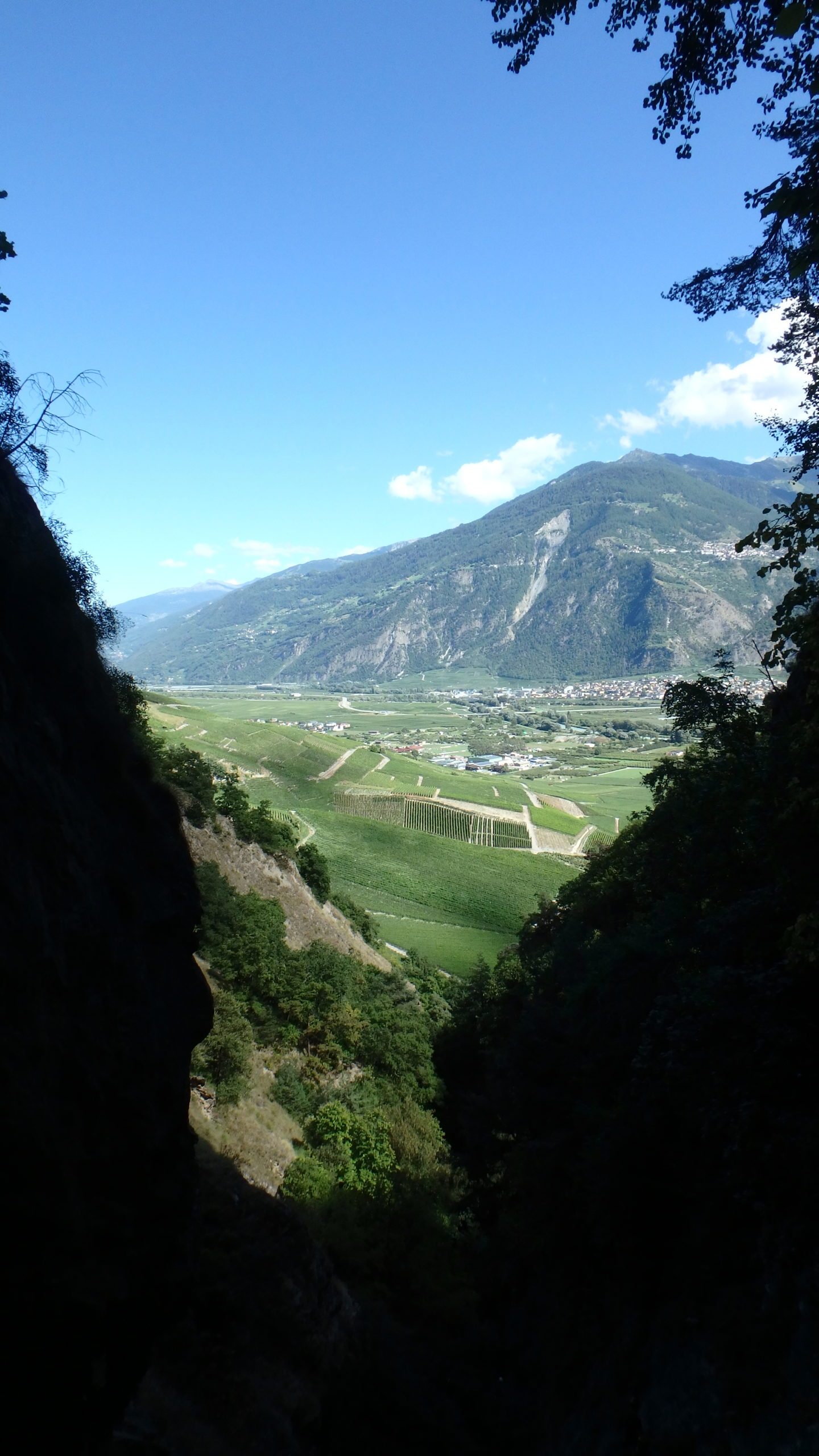
Climbing in Bramois is a pleasant and practical experience. This is a climbing area with numerous walls and routes. There are single and multipitch routes ranging from 3-4 up to 7 and 8. The climbing area is within a gorge with nice rock on both side and a river running through the middle.  This area has over 150 routes from which for you to choose from. The routes vary in length from 10-40 metres for single pitch routes. When I was there I climbed around the Africa wall. There are quite a few 5a and above routes. Some of these routes are more instinctive than others. There is one particular route where we had a tendency within the group to go too far too the right and then had to go left and then make it up to a crack. Once the complicated bit was negotiated the rest of the climb was easy. I am still getting used to climbing on rock rather than on an artificial wall or via ferrata. I later went to another wall a few minutes walk away and that climb was more interesting because it was up a chimney and some bits were mild overhangs that could be negotiated with observation. That wall was fun to climb. For more information about the climbing walls you can visit this site. The advantage of this climbing area is that multiple groups can be present at once and climb without getting in each others way. You have a variety of climbing routes and experiences and getting around is easy if you don’t mind walking up and down short trails. I will be tempted to climb around this area many more times in future. The climbing season is coming to an end for this year but I do plan on climbing here again next year. With the people whom I drove to the site we climbed until the sun had left the valley.

Strava Now Has Rock Climbing, Hiking And More

David - First of May 2018

Hey Richard. I actually built an app to solve this problem. I’m a climber and a runner and I wanted to be able to track my climbing and see all my exercise in one place. You can log your indoor climbs in the app and it lets you enter the grade, how many tops you completed and tailors everything to the specific gym you’re in. There’s no outdoor climbing yet but it’s planned for the future. Check it out on https://www.clamberapp.com if you think it will help you.

Strava Now Has Rock Climbing, Hiking And More

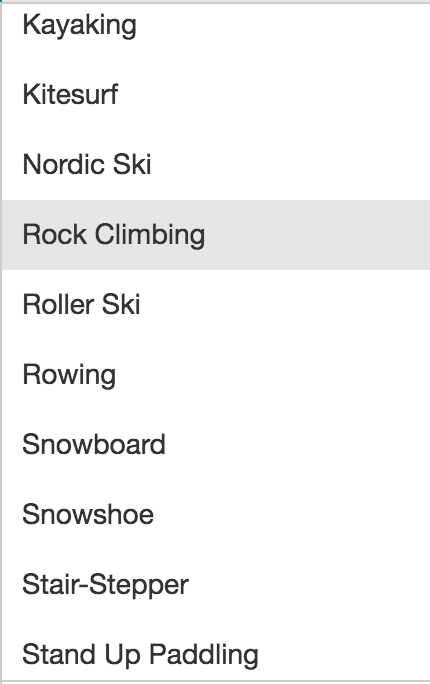
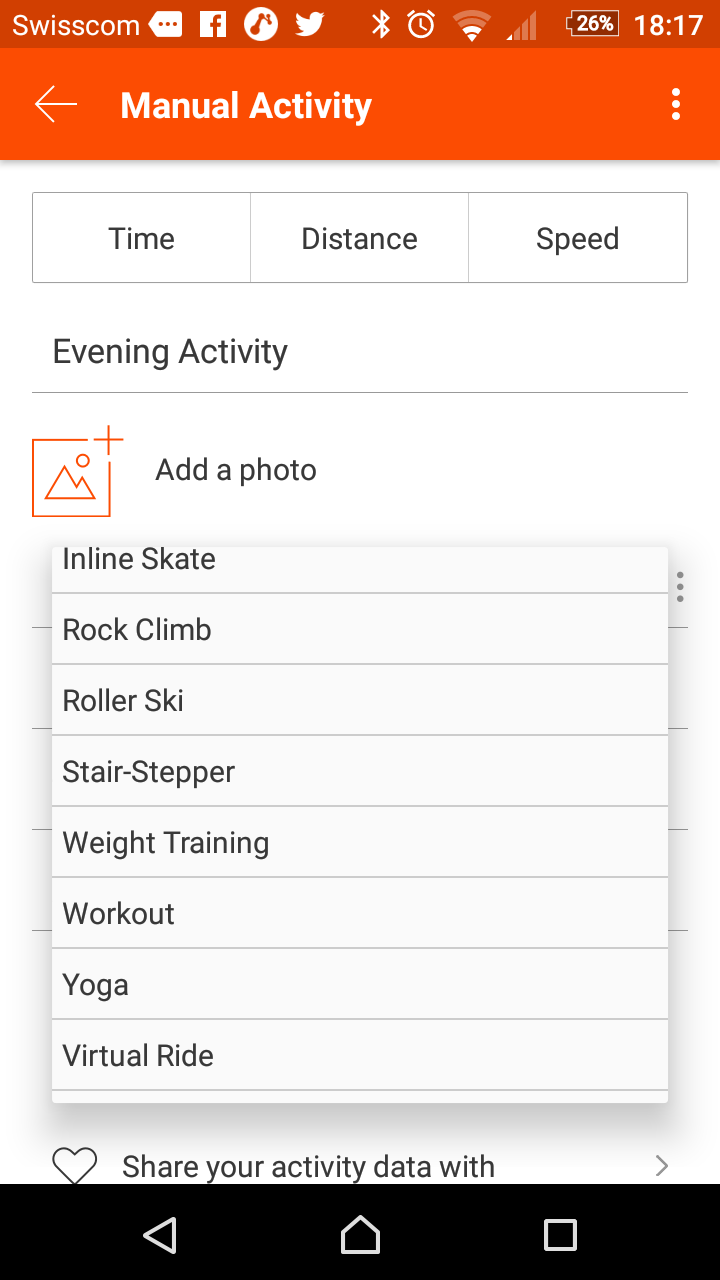
Strava now has rock climbing, hiking and many more sports. Sports tracker, movescount and other applications already allowed you to do this but it is nice to see one more network provide us with this option. [caption id=“attachment_3340” align=“aligncenter” width=“189”]Strava expanded the number of sports you can track Strava expanded the number of sports you can track[/caption] Up until now I had to make sure to go for a bike ride or three per week to keep people updated on what I did. During week days I am likely to go for bike rides. On two to three evenings per week I may go climbing and on the weekend I may go hiking or for a walk. As a result I can track the diversity of my activities. [caption id=“attachment_3341” align=“aligncenter” width=“169”]Strava has updated the list of sports Strava has updated the list of sports[/caption] With rock climbing I would like them to add two or three more fields. I would like them to add an option to add the grade of the climb we did. This would need to use the European and the American systems. It would help us track our progress and even track how hard we worked if we’re wearing a heart monitor as we climb. In effect it could provide us with a way of seeing who else is climbing and whether we match their skill level. In the long run this could contribute to new groups. I have created a group for Swiss Via Ferrata in anticipation of via ferrata practitioners joining the network and sharing their climbs. Until recently I would only track cycling and running. Now that walking, hiking and climbing have been added I can track a number of new sports. It should result in people using the app more frequently.  It could be fun to see climbing and hiking heat maps. We will see how they adapt the input section to match the sports.

Negotiating Overhangs

Negotiating overhangs is physical, fun and sometimes scary. It is for this reason that the Via Ferrata de Thônes via ferrata section is such fun. It gets your adrenaline pumping as you fight to keep hold and clip and unclip in the relevant sections. It forces you to overcome your fear of being over the void. The third section of the Via Ferrata de Saillon is a challenge for the very same reason. The video above shows rock climbers at the IFSC World cup negotiating an overhanging wall and trying various techniques to get further than other people. We see how they use heel hooks and go for it before losing their grip and falling. This footage is fun because we see them work to solve the problem in a number of ways and then fall. When they fall the belayer slows down but does not stop the fall so it looks as if they are falling towards the ground. Imagine an ordinary person getting that sensation. It would scare them. Fear is good because it keeps us safe. It means that we’re thinking of the consequences and we are aware of the dangers. It means that we will only progress within our comfort level. If we have doubt we can climb down to the nearest quick draw and rest. If we ignore that fear then we may fall. By staying in our comfort zone we are safer. When you’re climbing you know when you have good foot holds and hand holds. You also know how long you will be able to stay in that position. The more afraid you are the more energy you burn. That’s why positioning is important. In the video above we see that one person decided to climb feet first through the overhanging section. Our leg and feet muscles are much stronger than our arm muscles so they allow us more time to think of a solution. With time all of these climbers could have negotiated that section.

A Climbing Two year Old

A Climbing two year old is ordinary. They try to climb on to chairs, they climb to stand up. They climb up the stairs and the swings. What is less ordinary is for a two year old to rock climb like a grown up. As I watch the video below what inspires me the most is to see such a young human climb like a grown up. She learned by watching others and by being given the opportunity to practice at home and in climbing gyms. This video makes me happy because it is nice to see such a young person learn to climb. If I had been given the support and opportunity, and if the sport had been more evolved, then I too would have started climbing at a young age. I used to climb trees, climb on to garage roofs and occasionally climb rocks from which I could eventually get down. I had to wait until I was more than 20 years old before I could climb my first “dalle”. This child was given access to that world from a very young age. Her first memory will surely be of climbing. To make this story news worthy they had to add conflict of course. They had to speak about how some people who watch this think that it is dangerous to allow a child to climb. As the mother said “When she climbs in the gym we are watching her and she has 19 inch thick matts to fall on. The playground and the street are more dangerous”. They go on to say that she face planted on a street. Every single child does that. That’s the beauty of being a child. You’re bound to fall, cry, be picked up by your parents, and then a few minutes later start playing again. Climbing when you’re with the right people is no different. When and if I have children I will teach them about snowboarding and rock climbing and snorkelling. I want to pass on my passions. I want them to be the next generation of sports enthusiasts.

Climbing in Saint George - a short drive from Nyon and Morges

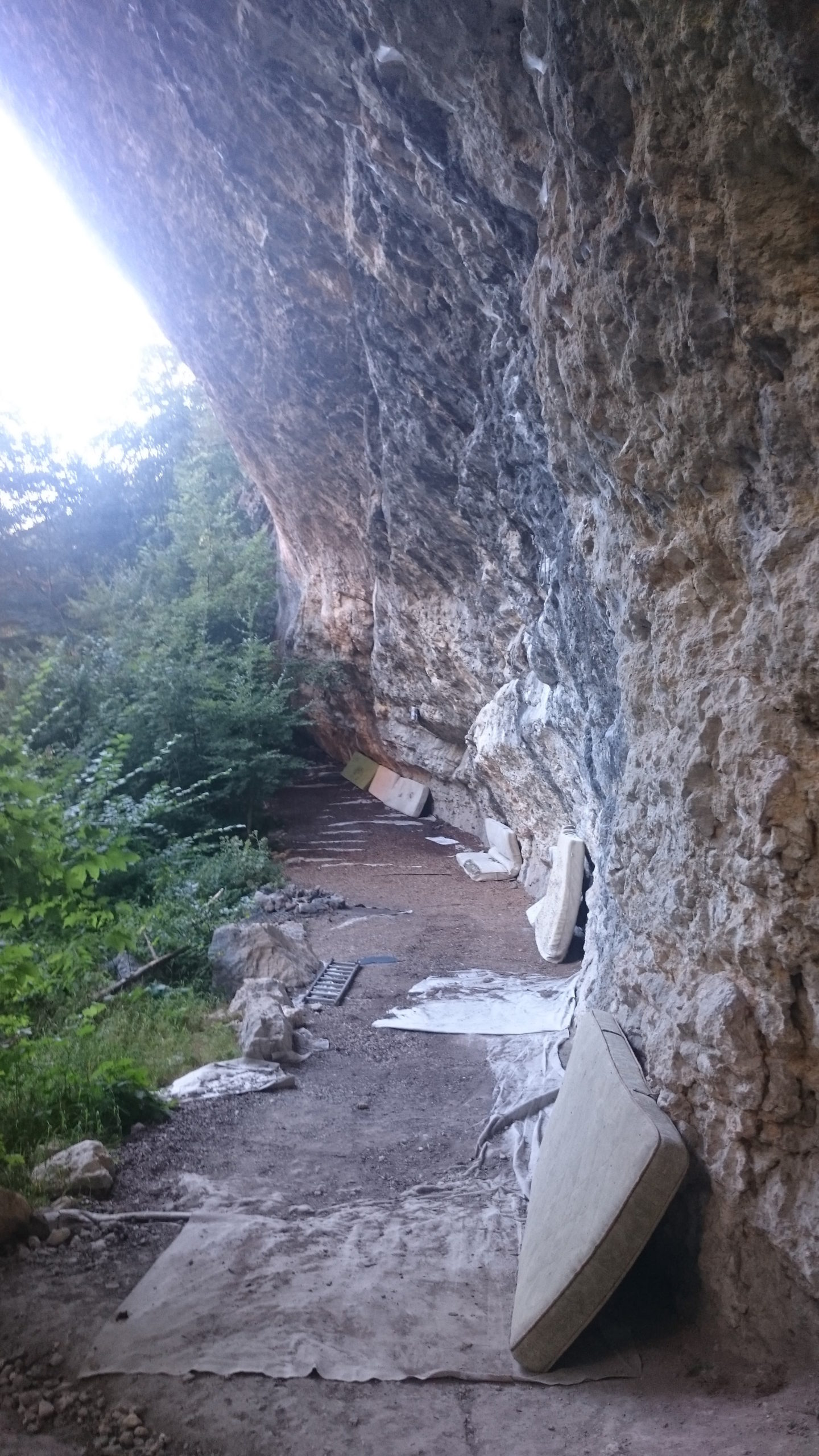
Climbing in Saint George is interesting for those living or working between Nyon and Morges. It provides routes from 4c to 7a and above and should cover most skill levels. Access time is a few seconds. You park your car near the lumber yard and a few seconds later you’re at the climbing wall. The image below is to show how short the walk is. It is also there to facilitate your finding the place should you want to climb here. I mention this because Sunday someone said that she liked to go to various climbing walls but that she often found it a challenge to spot the correct location. The site that you see in this image varies from 4c to 6a+. The gradient is slightly positive so you are more likely to slip than slide. Most of the routes start easily but getting to the end is the challenge. Some of the finger holds are tiny and it’s better to use new shoes. I’m using old worn out climbing shoes so my traction is not optimal so I climb using my heels when possible. To the right of the image above you have a small path that leads to a nice rock surface that is overhanging. Under this overhanging rock you find traces of barbecues, mattresses and a few quick draws. The climbing here is technical. It starts from 7a onwards so is more interesting for those climbers with the finger strength and endurance to attempt sustained overhanging climbs. [caption id=“attachment_3311” align=“aligncenter” width=“576”]Saint George Overhang climbing Saint George Overhang climbing[/caption] This is a nice location and if you walk further along, to behind the location from which I took this picture there is a cavern. This site looks interesting and yesterday there was an interesting sound. In a nearby valley or clearing Swiss military were practicing with .50 calibre guns. I called it artillery but a former British Marine classified the type of gun. If I was given the choice between Dorénaz and Saint George I would choose Saint George for climbing because if I’m going to climb a wall by a road it might as well be after a short drive. For further information on this climbing wall: Saint George

The Third part of the Saillon VF

Yesterday afternoon after two top rope climbs in Dorénaz we drove to the Via Ferrata de Saillon to climb this one. It is a via ferrata that I know well. This time I decided that I wanted to try the third part of the Saillon VF once again. What makes the third part special is that it is marked as TD+, more than very difficult. This is a more technical climb for people who are familiar with the sport. [caption id=“attachment_3301” align=“aligncenter” width=“576”]Looking towards Saillon OLYMPUS DIGITAL CAMERA[/caption] The first time I tried this via ferrata I was with a group but climbed it as a solo effort. I went at my speed and I just wanted to complete it as quickly as possible. The challenges were being able to handle the long drop below and the physical demands of the via ferrata. When I climbed it alone I increased my heart rate by a lot and my muscles felt that they were weakening so although it felt excellent it made me skip this portion on two or three subsequent trips. For a while people would frequently get trapped on the third part and there was a sign reminding people that if they have any doubt they should not do it. If the helicopter is called in it will cost you 3000CHF or more. Imagine all the equipment that you could buy or the holiday that you could enjoy with this money. Yesterday we climbed the first two parts of the via ferrata with no problems. We went at a comfortable speed and the group stayed as one. When we got to the third part two novices went up and went across to the bridge to watch us climb and we formed an action plan. This time we moved as a team. We went forward and rested frequently. We rested before the overhang and then again after the overhang. We rested before climbing the rope ladder and then again after. Finally we went to the last challenge, the vertical ascent and we rested on a nice slab of rock. We then climbed that final bit and although it is demanding the muscles coped well. I really like that I found this climb so much easier than the previous climb. I don’t know whether rock climbing, paragliding and the pace helped. I know that in future I will feel confidant about doing part three. My training and this pace paid off.

Gallantry and Rock Climbing

Gallantry and Rock Climbing are a good combination. In Rock climbing the person with more experience or comfort helps the person with less comfort. In some cases it might be helping people walk on trails and in other cases it may be walking at the pace that is comfortable for others. According to the Merriam Webster website gallantry can be a number of things:

1 archaic : gallant appearance 2 a : an act of marked courtesy b : courteous attention to a lady c : amorous attention or pursuit 3 : spirited and conspicuous bravery