Via Ferrata

If in Doubt Abort

There is an old rule that I live by. If in doubt, abort. It’s related mainly to when I was diving but is linked to other forms of extreme sports. The logic is simple. If you’re going hiking, climbing, diving or some other dangerous sport and you have some doubt, for any reason, the rational thing to do is to abort.

Turning Around or Aborting

The idea is that if you’re 200m from the summit of a hike and you get hit by a hail storm you turn around, despite being so close to the summit. The idea is that if for any reason one person doesn’t have the right gear to dive, and you’re diving with someone else, then you abort.
The Roche Au Dade Via Ferrata

Two days ago I was agonising about whether to go for a via ferrata(VF) or a hike. Eventually I decided that I would go for the hike, because hiking was an 18 minute drive away. I went for a walk/run and then I found that I had a burning desire to do the via ferrata. I went down to the cave and rummaged through to find various bits and pieces. I found my Grigri, climbing rope, harnesses and more. I also found that I had a tandem speed which I considered using.

Day 54 Of Self-Isolation in Switzerland – The Via Ferrata Season Resumes on Monday

The Via Ferrata Season resumes on Monday with La Via Farinetta reopening. This news came via the Via Farinetta Saillon official page, as seen with the Facebook embed below.

Bonne nouvelle! La Via sera ouverte à partir ce lundi 11 mai ?? Néanmoins nous vous rendons attentifs sur les instructions des autorités. N’hésitez pas à nous partager vos photos. Prenez soin de vous!

Posted by Via Farinetta Saillon Officiel on Thursday, 7 May 2020

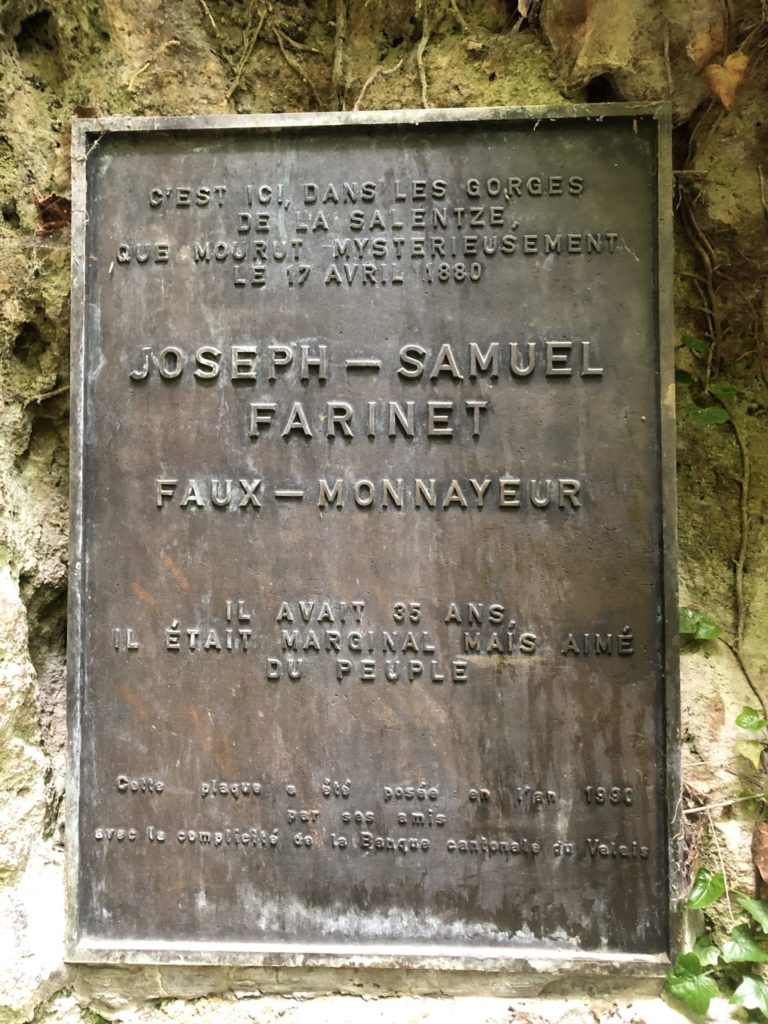
La Via Ferrata Farinet

Plaque describing Farinet

Plaque describing Farinet

For a week or two in April the weather was nice but since then the weather has been bad. We had new snow, high winds and rain. Yesterday rain was announced yet again for parts of Switzerland but luckily only clouds were announced for Saillon where the Via Farinetta is. I expected it to be cold and grey but practicable.

We had moments of sunshine and the weather was even pleasant. As a result of all the rain and snow the waterfalls were full of water, to the point of growing with water and spraying the first part of the Via Ferrata.

Via Ferrata Jacques Revaclier

The Via Ferrata Jacques Revaclier is located on the Salève a short drive from Vitam Parc and within easy driving distance of Geneva and Nyon. The Via Ferrata requires scrambling over a few metres of rock to get to the start.

This via Ferrata has two parkings. The first of these is for the Abbaye de Pomier and the second is for the “promeneurs”. If the abbaye parking is empty use this one because you may hit the bottom of your car on the dirt track heaving up to the hiking parking.

The Klettersteig Rider 3.0

The Klettersteig Rider 3.0 is a dual system via ferrata kit. It has a carabiner like standard via ferrata kits have and a “rider” system. The “rider” system fixes to the via ferrata cable and progresses with you. As you get to a part where you need to switch you move the rider system up first and then you move the carabiner. 

https://www.youtube.com/watch?v=lmmXodEZQxo

What I like about this system is that if you slip or lose grip of the rungs for any reason you will only fall the length of the connector rather than the length from where you are to the most recent pig tail. This reduces the fall distance by a considerable amount. 

Clean Water for Hikes and cycling, without the weight

Clean water is important to have when you’re cycling, hiking or climbing in summer but the issue is that it is heavy. When I go cycling I go with just one flask and I fill up the water bottle when I get to fountains that are marked as safe to drink from. When I go hiking or climbing I usually do not go with more than one and a half litres of water although I have gone with up to three litres for a hot summer day’s activities when the temperature is above 32°c. In Switzerland, France and Italy you theoretically do not need to walk with that much water because you cross streams, fountains, rivers and lakes. If you had a water filtration system you could theoretically purify the water from these sources and continue hiking. Yesterday I came across Katadyn and two solutions for water filtration.

Electro-dance yodelling and other Valais videos

This yodelling video is currently the number one trending video on youtube. I am unclear on whether it is for Switzerland or a bigger region. A small tractor is driving up a Swiss Alpine road with a group of yodelers sitting in a trailer. A car with Ma Cherie playing on the radio overtakes and the yodelers start to yodel the song. This video is on the Canton de Valais Youtube account.

Using an Xtorm Solar Charger

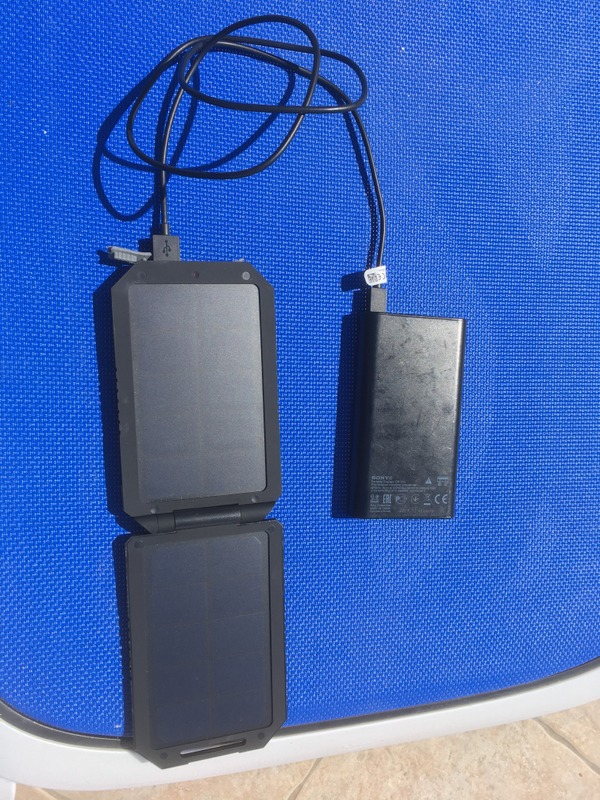
While in Spain for three weeks I was playing with the Xtorm solar Charger. I found that it worked well for the charging of tablets and e-book readers but not mobile phones. [caption id=“attachment_3462” align=“aligncenter” width=“225”]Solar charger and external battery Solar charger and external battery[/caption] For years I have wanted to play with solar power. I have wanted to buy a solar panel that I could fix to my bag or that I could use to charge devices. I often looked at the price and weight and changed my mind. I don’t want something that adds kilos to my load, especially if I am climbing. With a small device like the one pictured above you can carry it with you and use it to charge devices. When you drive to the hike or climb, or when you stop for lunch or a drink you can take out this device and start charging your phone, gps, led lights or other devices. if you want to charge devices to 100 percent then I would recommend charging ipads, ebooks, gps watches and other devices with this device. I found that it’s great for providing a phone with a top up charge but that because of my mobile use patterns it will only provide one full charge per day. When we hear people speak about solar power we always hear about “How do we store the power we generate so that we can use it when we need it?” and I found a way. When I woke up in the morning I would put the solar charger near a window or outside if there was no chance of rain to charge up to over 75 percent. When it reached this charge I connected the solar charger to a 10,000mah external battery. It is by using this technique that I have been able to keep my external battery fully charged with no need to plug it in to mains power. In effect it means that I can charge the ipad, the phone or the e-book reader without using mains power.