Travel

From Grächen to Zermatt via the longest suspension bridge: part one

Hiking from Grächen to Zermatt via the longest Suspension bridge is an interesting two-day hike. It provides you with views of glaciers, boulder fields, scree slopes and more. It also provides you with the opportunity to cross a suspension bridge that takes six minutes.

Hiking up from Grächen

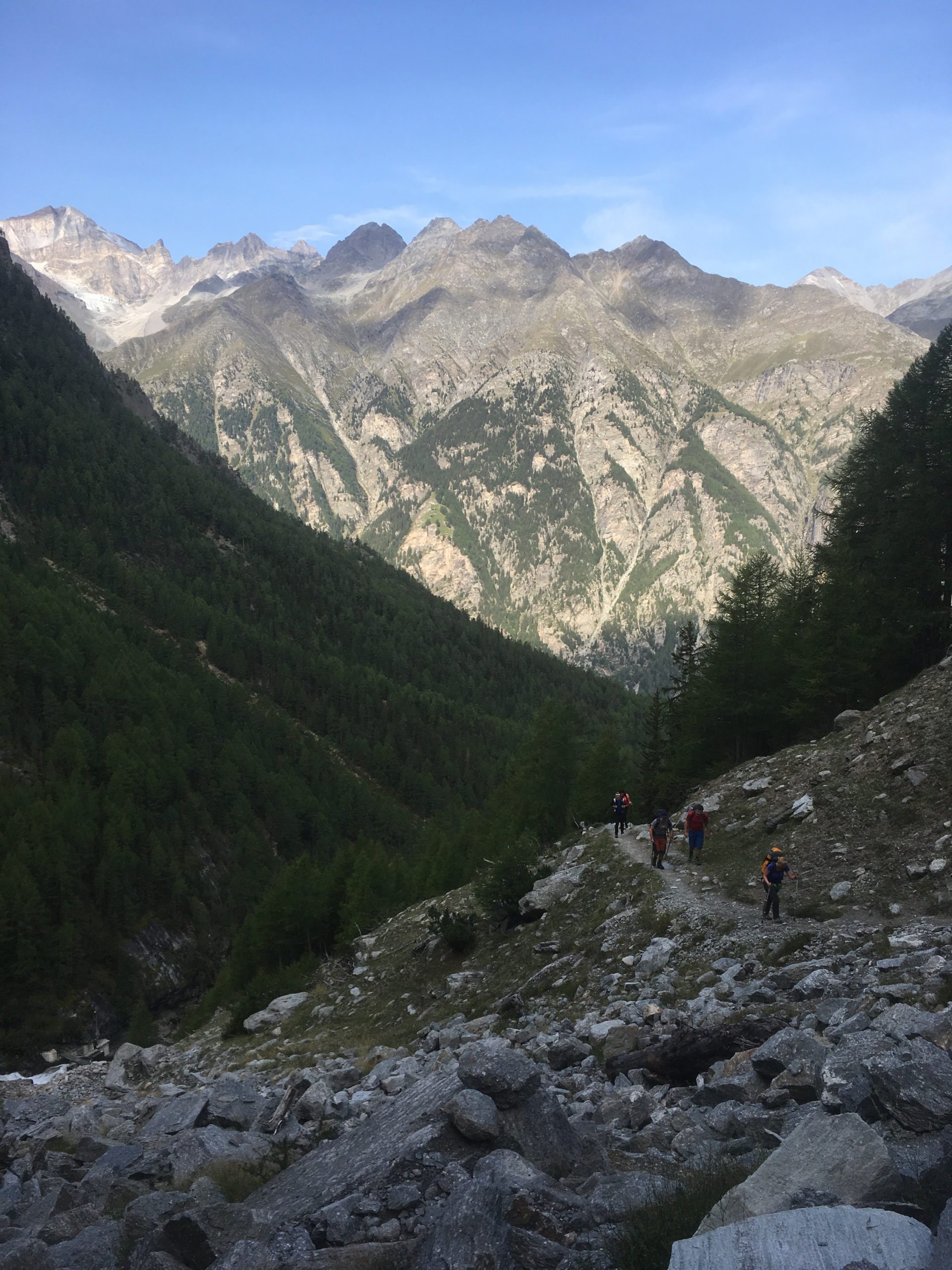
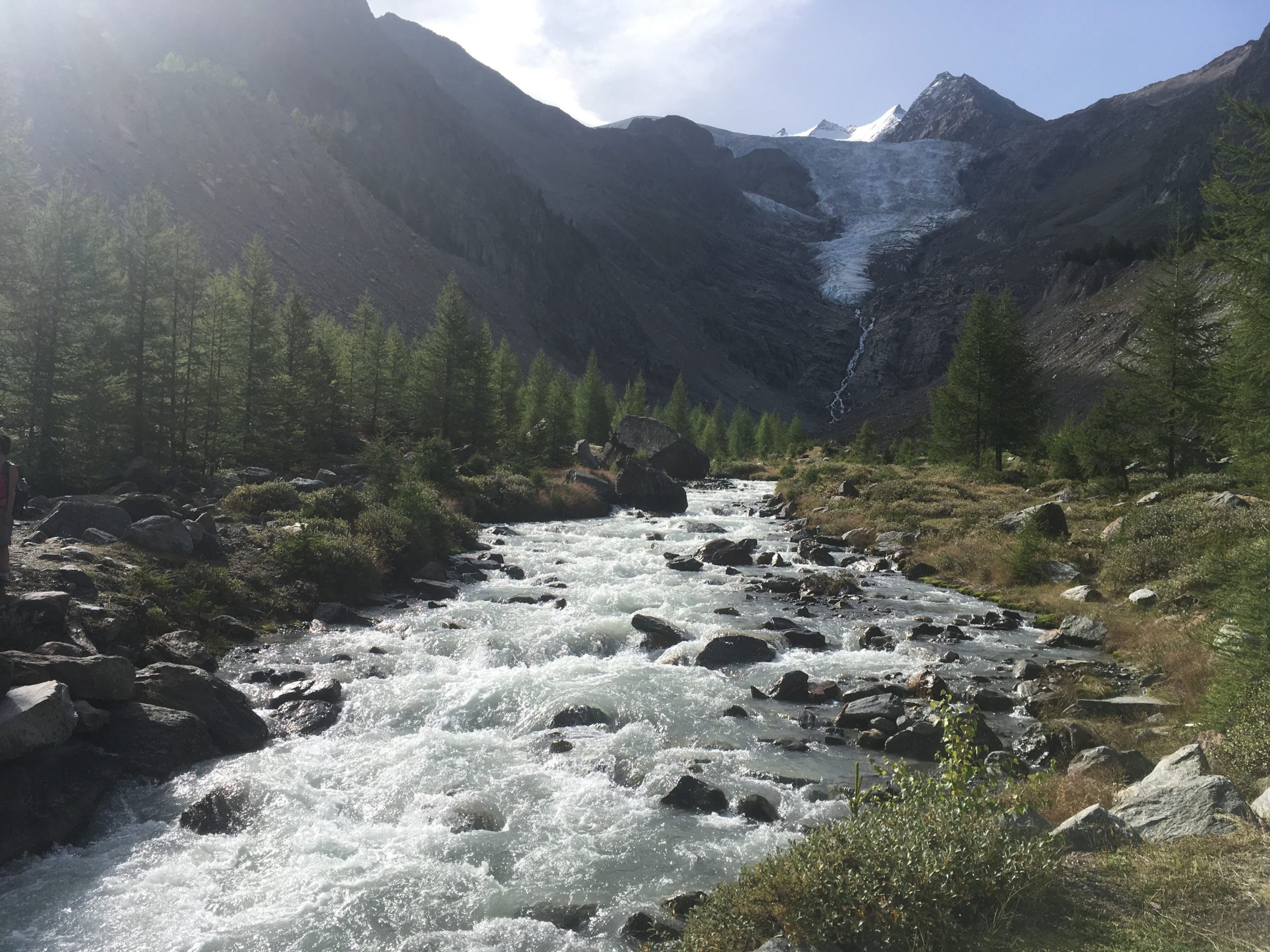
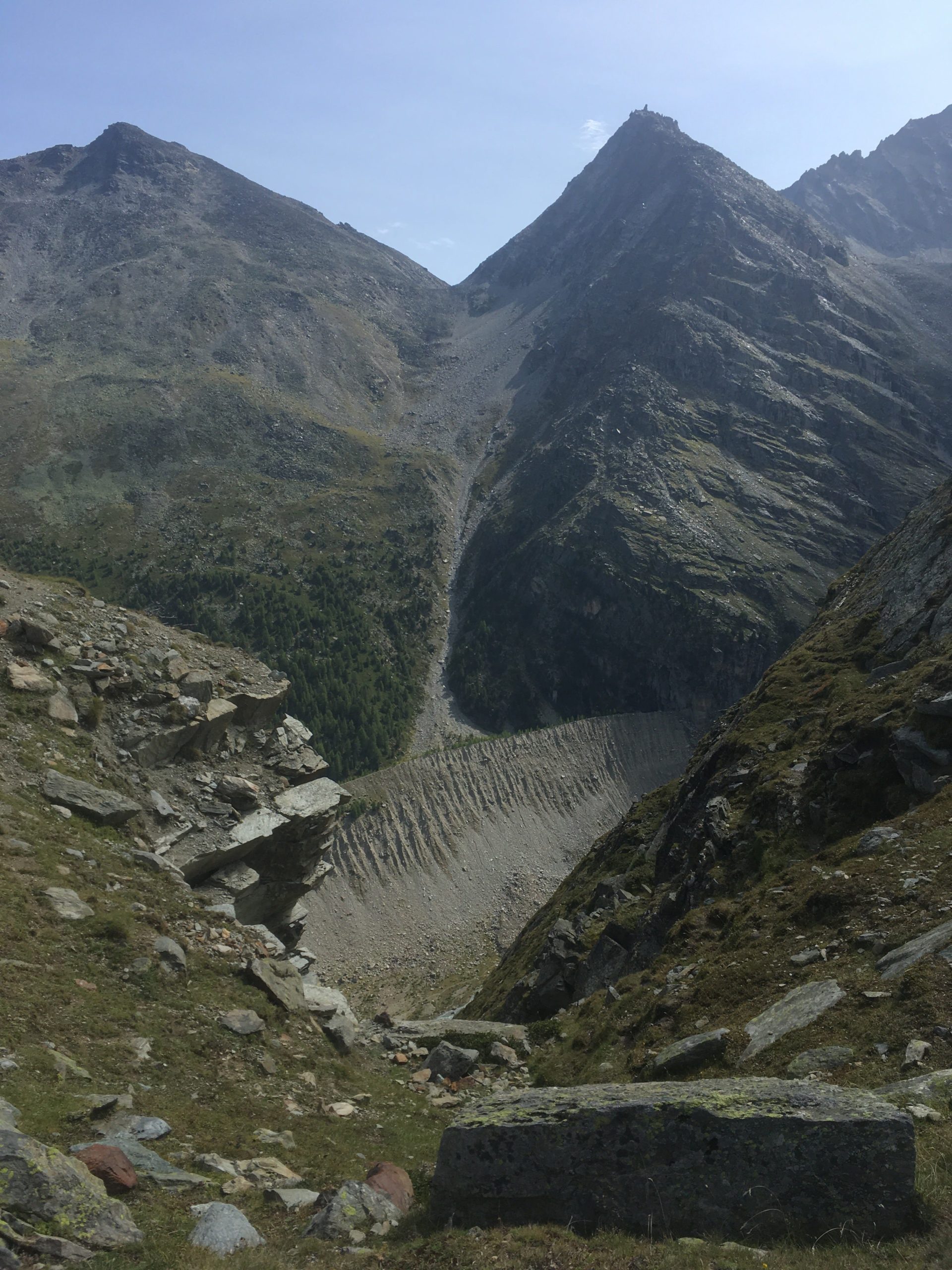
The hike up from Grächen takes you up through a forest. You go through a forest and there is a stream to your left and the nice landscape to your right. The hike up is easy. [caption id=“attachment_3736” align=“aligncenter” width=“768”] Path that leads up to a first view of a glacier[/caption] As I hike with a water filter I like to get water straight from glaciers when I can. I gathered water from the glacier. It tastes good and it’s fresh. Gathering water from this point is easy. [caption id=“attachment_3737” align=“aligncenter” width=“1024”] A nice Cirque[/caption] From this cirque you climb up through some more trees and eventually you get to a nice view point from which you can see the landscape. This provides a good point for a snack and rest. [vrview img=“https://www.main-vision.com/richard/blog/wp-content/uploads/2017/08/export_1503909534859.jpg” width=“500” height=“500” ] Use mouse to look around image above. (360 image) [caption id=“attachment_3738” align=“aligncenter” width=“768”] You can clearly see evidence of where the glacier was.[/caption] Many years ago the glacier reached down into the valley below. You can clearly see the depth of the former glacier. At this point you are above the tree line. You begin to walk on bare rock. The slopes get steeper and you are more exposed. [gallery ids=“3741,3740,3739”] One segment of this hike crosses a zone of active rock falls. When we were walking here we heard a loud noise that sounded like thunder or a jet. After a few seconds we saw large rocks falling down the slope and bouncing. Where they hit the ground clouds of dirt and dust erupted. It was too far away for me to get good video footage. At this moment we were more attentive. If you look up you see that massive rocks get loose and fall. Look at the contrast between the sign post and the boulders. You need to scramble and climb over rocks and navigate your way towards safety. [gallery ids=“3742,3743”]
Caught in a hailstorm 200 meters from the peak

A few days ago a group of us were caught in a hailstorm 200 metres from the peak. When we were approaching the summit we aimed to climb clouds came in and covered the peak and rain fell. At this moment we had doubts about going on. Half an hour later the clouds had gone, we could see the summit and so we started for the summit. As we climbed up the conditions were good. There was a strong wind As we got within two-three hundred metres from the top the wind picked up and we could hear lightning several seconds away. At this point, we slowed our climb. [gallery ids=“3725,3726,3728”] As I looked behind I could see the clouds coming in fast and as I looked the other way I could see the clouds come that way too. By this point the wind was strong and the sky became dark with the clouds we were in. It started to rain and then hail. At first, it was a few very small hailstones but within a minute or two they became large enough to become painful through a cap and a rain jacket hood. We sheltered against rocks to minimise what was exposed to the weather. The intensity of the hail increased and as I started to feel pain I hitched my hiking bag over my head, shielding as much as I could beneath it. As I did this I looked out and it looked like someone was throwing buckets of hailstones. I could feel my trousers getting drenched and my hands got very cold. The wind shifted and the hailstones started to pummel my back and I stayed sheltered. It was an uncomfortable situation to be in. Water was running from my trousers into my shoes and my feet were soaked. When the hail started to subside I stood up and we started to head down. I looked up. One person from the group was rushing down and I decided to descend as well for a bit. I couldn’t see the person who was leading the group so I decided to wait. The storm seemed to have passed and I chose to wait. When he came down I blew into my hands vigorously, warming them up again. Diving in cold lakes I grew used to having cold hands so I did what I always did. I warmed them up again. This was a mild cold. After some dives, I had such cold hands that they hurt so badly that I was close to tears. In this scenario, I was just uncomfortable. The surface was white with hailstones, as if it had just snowed. The leader did come down, smiling. By this point it was an adventure. The concern we had from being in such a situation became amusement at having experienced extreme weather. It’s the first time that we had been caught in a hail stone after years of hiking in the mountains. I almost always carry my rain equipment when I’m hiking for just such an occurrence but usually, it’s just weight that I carry in case it is required.

European Identity and Free Roaming

European Identity will benefit greatly from free-roaming. Today roaming fees between European countries have been scrapped. This means that your mobile phone is the same whatever country you go to. It means that you will have the same access to minutes and data. When you travel you will no longer need to change app permissions to reduce data cost. It also means that your images keep backing up via your data plan.

Google Arts & Culture

Google Arts & Culture App

Google Arts & Culture is an app that allows people to look at Arts and culture from around the world easily and intuitively. This app allows you to learn more about arts and culture based on your current location as well as by topic, art medium and more. With this app, you can look at 360 images of monuments and locations. You can also zoom into artworks. When we were teenagers we studied the history of art. We looked at artworks in books and in documentaries. We then went to Florence and saw some of these artworks in person. We saw Michelangelo’s Statue of David and more. As children in Europe, we went to Pompei, to the Vatican museums and many other locations. When you walk in the Sistine chapel you see this art in context and you see how large it is. This app, by Google allows you to do the same thing. It allows you to study art from your phone as you commute or as you queue or do other things. In effect it helps to educate and inform us about Art and culture. We are no longer restricted to small pictures in arts books.

Using an Xtorm Solar Charger

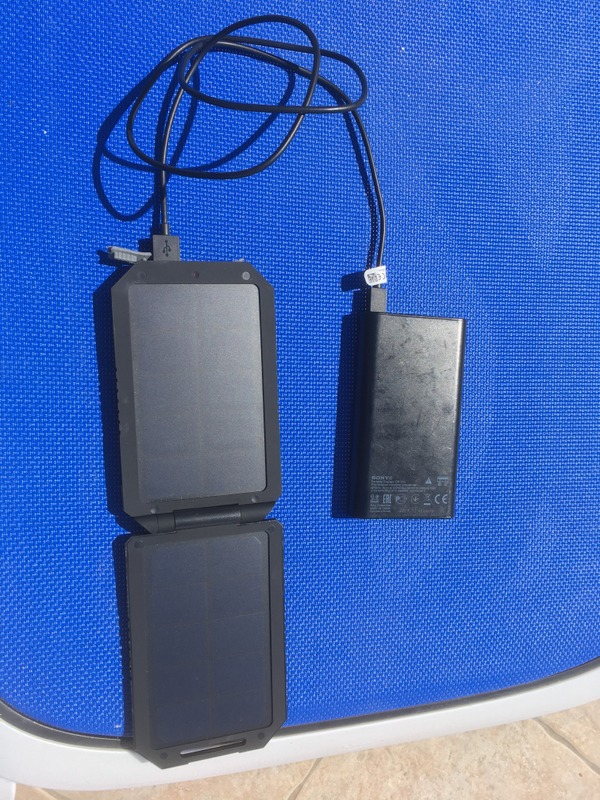
While in Spain for three weeks I was playing with the Xtorm solar Charger. I found that it worked well for the charging of tablets and e-book readers but not mobile phones. [caption id=“attachment_3462” align=“aligncenter” width=“225”]Solar charger and external battery Solar charger and external battery[/caption] For years I have wanted to play with solar power. I have wanted to buy a solar panel that I could fix to my bag or that I could use to charge devices. I often looked at the price and weight and changed my mind. I don’t want something that adds kilos to my load, especially if I am climbing. With a small device like the one pictured above you can carry it with you and use it to charge devices. When you drive to the hike or climb, or when you stop for lunch or a drink you can take out this device and start charging your phone, gps, led lights or other devices. if you want to charge devices to 100 percent then I would recommend charging ipads, ebooks, gps watches and other devices with this device. I found that it’s great for providing a phone with a top up charge but that because of my mobile use patterns it will only provide one full charge per day. When we hear people speak about solar power we always hear about “How do we store the power we generate so that we can use it when we need it?” and I found a way. When I woke up in the morning I would put the solar charger near a window or outside if there was no chance of rain to charge up to over 75 percent. When it reached this charge I connected the solar charger to a 10,000mah external battery. It is by using this technique that I have been able to keep my external battery fully charged with no need to plug it in to mains power. In effect it means that I can charge the ipad, the phone or the e-book reader without using mains power.

What is There to See in the Lake

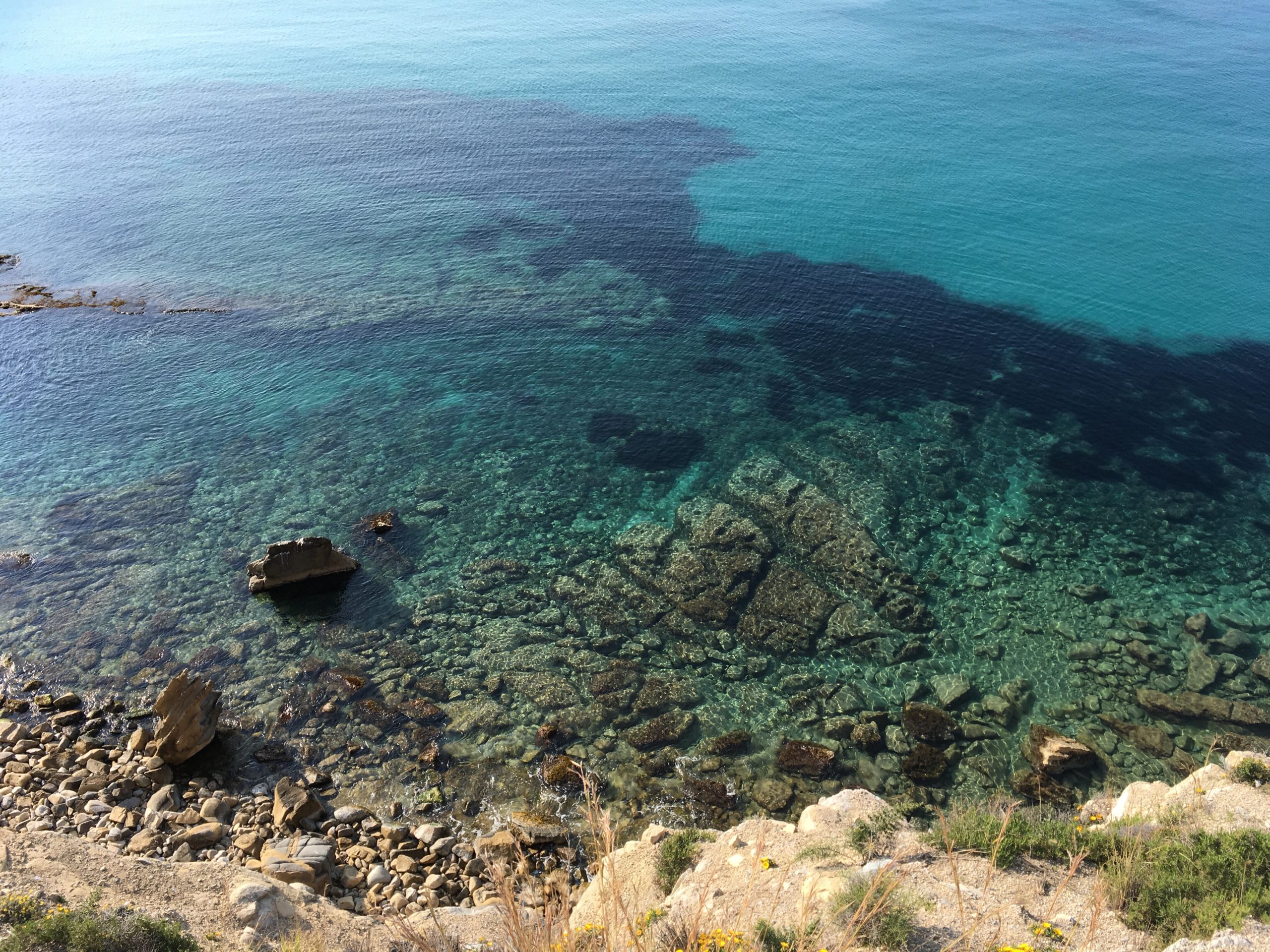
What is there to see in the lake is a question that people have frequently asked me. For at least two years I would go diving nearly every weekend. I would dive in the Lac Léman, the Lac de Bourget, the Gouille Du Duzillet. I also dived the English channel in November. I dived all year round. In summer we would cook in our dry suits and in winter our hands were sometimes so cold that we couldn’t take off our dry suits. Lake divers are an eccentric, hardy bunch of people. I used to say that the beauty of lake diving is that it is not affected by weather. You’ll get wet anyway and if you go below a certain depth water is always at 5°c. I’m in Spain at the moment and I decided to go snorkelling with my semi Dry Suit around El Portet. This is the cove where I worked on getting my rescue diver certification. I snorkelled by the rocks to the west at first. The waters are shallow and I did see a school of juvenile fish. As I finned further I saw some slightly larger fish and urchins. After a while of searching I finned to the other side of the bay. New sand has been deposited along this beach. As a result of this new sand visibility has suffered near the beach. By the rocks the visibility is still good. From the image above you can see that the water is really clear. I thought that with such clear waters I would see a lot. I was hoping to see fish, maybe an eel or two and maybe some crabs. It’s good to dive and snorkel close to marine reserves. In marine reserves fish are allowed to mature and grow and eventually they branch out to other areas. As a result diving and snorkeling are more rewarding. It’s at the supermarket fish section that I saw the most fish. It’s a shame that they were lying dead, on ice, rather than swimming underwater. In effect I see as many fish in the mediterranean as in the lakes of Switzerland and France so you travel for the climate rather than aquatic life. People need to allow the seas and oceans time to recover. It’s a shame not to see much aquatic life. I should try again in a different location where there are fewer people. I might be luckier.

Travel and data roaming

In July Roaming will be a bad memory for Europeans travelling within Europe. As a result of this the sale of sim cards to Ingress players, pokemon Go players and others will also be a thing of the past. What will not change is that we use social media apps to communicate with other people. As a consequence of this use we see local adverts. At the moment I am in Spain and see Google España rather than Google Switzerland. I see Spanish adverts. Local and national products are advertised to me as I browse. As Google, Facebook, Twitter and other companies know of my interests when I am in Switzerland they can extrapolate them to local businesses in Spain. Diving, climbing and other companies would benefit from me seeing their offers. if I have just a gigabyte of data then I need to throttle many of these apps. I don’t want self loading videos and other content. I want a minimum of content to make that gigabyte of data to last until I get on the plane. Advertisers suffer because as I reduce my normal browsing habits it reduces their chance of being seen. In my opinion telecom operators and advertisers should collaborate together to make it cheaper for travellers to use their smartphones. Advertisers should buy data from telecom operators so that travellers are more inclined to use their phones. Businesses will benefit from us posting to and browsing from Instagram, Swarm, Google Local Guides, Trip advisor and many other services. Everyone benefits from cheaper roaming. At the moment businesses with free wifi are helping people see more adverts. With cheaper roaming globally a receptive audience will see more adverts hence providing them with more ideas and inspiration for activities during their stay in an unfamiliar place. Advertisers and businesses should capitalise on this potential audience.

The Tiny House movement and travel

The Tiny House Movement and travel combine well together. In this video a Czech couple bought a fan and transformed it into a self contained home to live in for a year. They chose it because they wanted room for the surfboards, wet suits and more. It has space for cooking lamb shanks, socialising and sleeping. You can enter the van both from the front and the back. I really like the idea of this van. It would be fun to travel for a few months from place to place, do what there is to do, see what there is to see and then move on. This would adapt well to hiking, climbing, via ferrata and other sports. It allows you to live comfortably without spending money on hotels, villas or other places. The project cost them around 10,000 dollars to build so if you work and save up for a few months you could easily take a gap year and afford to do such a project. Working on such a project does require some skills in wood working. He said that it took hundreds, if not thousands of hours to prepare the van. If you’re travelling then a few steps a day for a few weeks would get to this final result. At one moment they speak about the herb garden that they have in the glove box. As they had the space they planted some mint and other herbs for cooking. As a result of this herb garden they said that when driving on rough roads the Mint plant gets shaken about and in the process the van smells of mint. It’s a natural air freshener. In a month they will move on and sell the van to continue travelling. If I was travelling to New Zealand I’d like to try living in a van like this and use it as a base to go hiking, climbing and enjoying other sports. This seems like a pleasant way of travelling.

Learning about Tiny Houses

Learning about Tiny Houses is interesting. There are a number of features/documentaries online where people build their own tinyhouses either from shipping containers, trailers or other structures. The aim of these tinyhouses is to maximise space and reduce costs. Some of these homes are entirely off the grid. They collect rain water and solar panels provide power. The bedroom is often built above the kitchen and climbing wall holds are used instead of ladders or conventional stairs. One home folds out from a truck to become a castle. One tower serves as a toilet and the second one serves as a shower. The space above even features a bath. Another Tiny home is designed as a tree house providing a beautiful 360° panoramic view of the landscape around. This tiny home is interesting because it’s built out of half a shipping container. For a change the bed is below and the living room is above. The kitchen and office are next to it and there is a shower from which to watch birds. I have seen a lot of people speak about minimalist living, living off the grid and living out of cars, campers and other vehicles. By watching videos about tiny houses you begin to understand that there are certain basics that you need to have and that these basics fit in to small spaces. If you have a van, a caravan or other vehicle then you can live as comfortably as these people. This last video would make for a perfect summer home for recent university graduates or high school graduates. It’s small, light and mobile. You’re self sufficient to a great extent and as long as it’s warm you have your own space. It’s amusing that in at least three videos we hear about people learning to be neater through living in such small spaces. As a scuba diver, rock climber, cyclist and geek the biggest challenge for someone like me would be to find a place where I could store my diving gear and especially the scuba tanks. They’re bulky. Diving gear also needs to dry properly to avoid the smell of the lake (as I used to dive weekly in the lake). My view of living in a tinyhouse has changed through the watching of these documentaries. It shows you that what you want is functionality rather than size. You want “gadgets” as these maximise how you use available space.

A 360 timelapse walk through the woods

Yesterday I went for a 360 timelapse walk through the woods above Trelex. I set the camera to take an image every 8 seconds. As the woods were dark and dense it took some effort not to walk in too much mud and not to slip too many times. The result of the timelapse is not as good as I had hoped. Ideally I want to find a way to fix the camera so that it looks at my direction of travel. From this footage you see that the camera suffered with the lack of light and that because the camera occasionally rotated to the right it is easy to become disorientated. It is for this reason that it is useful to find wide open spaces when possible and to find places with a lot of ambient light. What I like about this video is that we can see the various exercise locations. We can see the horizontal bars, the rings and other activities. When I design something to hold the camera steady while I walk with it I can have a little more fun. I could hang on the rings or play with the bars. With a little luck the month and a half of bad weather is coming to an end and I will be able to go out and get to some interesting locations to film some time lapses. There are a number of panoramic locations that I think would lend themselves well to 360° views. Imagine a walk by the lake side or a walk near the summit with a view of the landscape below. What locations or sites would you like to see as 360° timelapse videos?