Social Media

The Facebook Monopoly

I am tired of the Facebook monopoly. While Google gets fined for helping people shop websites like Facebook do the opposite. Instead of increasing the diversity of content on the web and the sharing of ideas it has helped create silos of like minded people. Likeminded people is a polite way of saying brainwashed in the case where opinions are based on opinions rather than facts.

Low value posts

Shorts on Facebook are usually very short. You skim through dozens, even hundreds of posts but none of them have much value. Compare this to blogging. When you blog you need to develop ideas that you can expand to at least three hundred words. With those three hundred words you can include images, video, tables and more. You can tell a complete story. On Facebook you post some text and people might read it.

Thoughts on Google's fine.

In a Facebook dominated world, in a world where people see Facebook and the Internet as the same thing it saddens me that Google gets a 2.7 Billion Euro fine when Google is an excellent source to search for products, reviews and the best deal.  

“What Google has done is illegal under E.U. antitrust rules,” Ms. Vestager said in a statement on Tuesday. “It denied other companies the chance to compete on the merits and to innovate. And most importantly, it denied European consumers a genuine choice of services and the full benefits of innovation.”

Mental Health and Social media

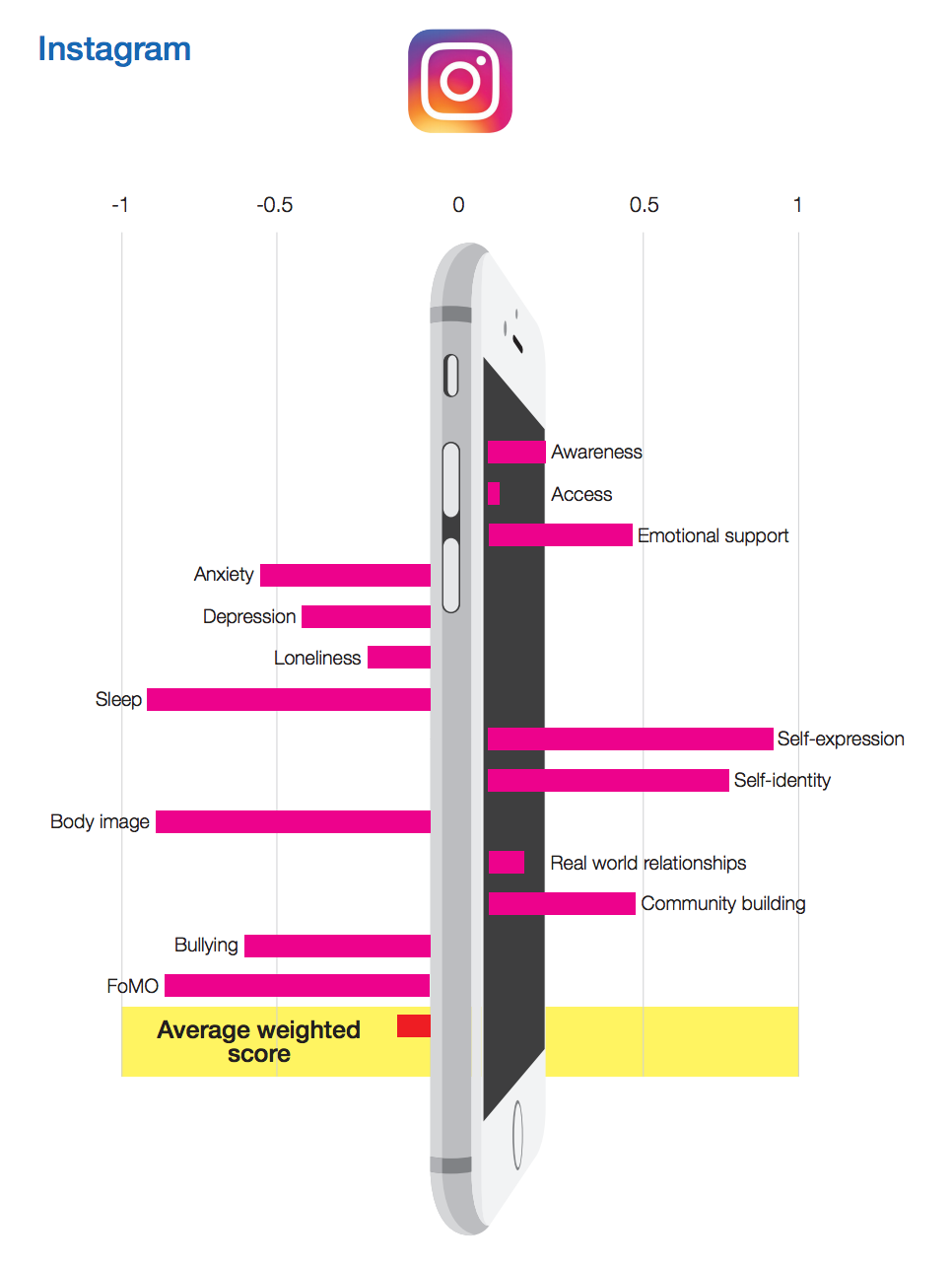
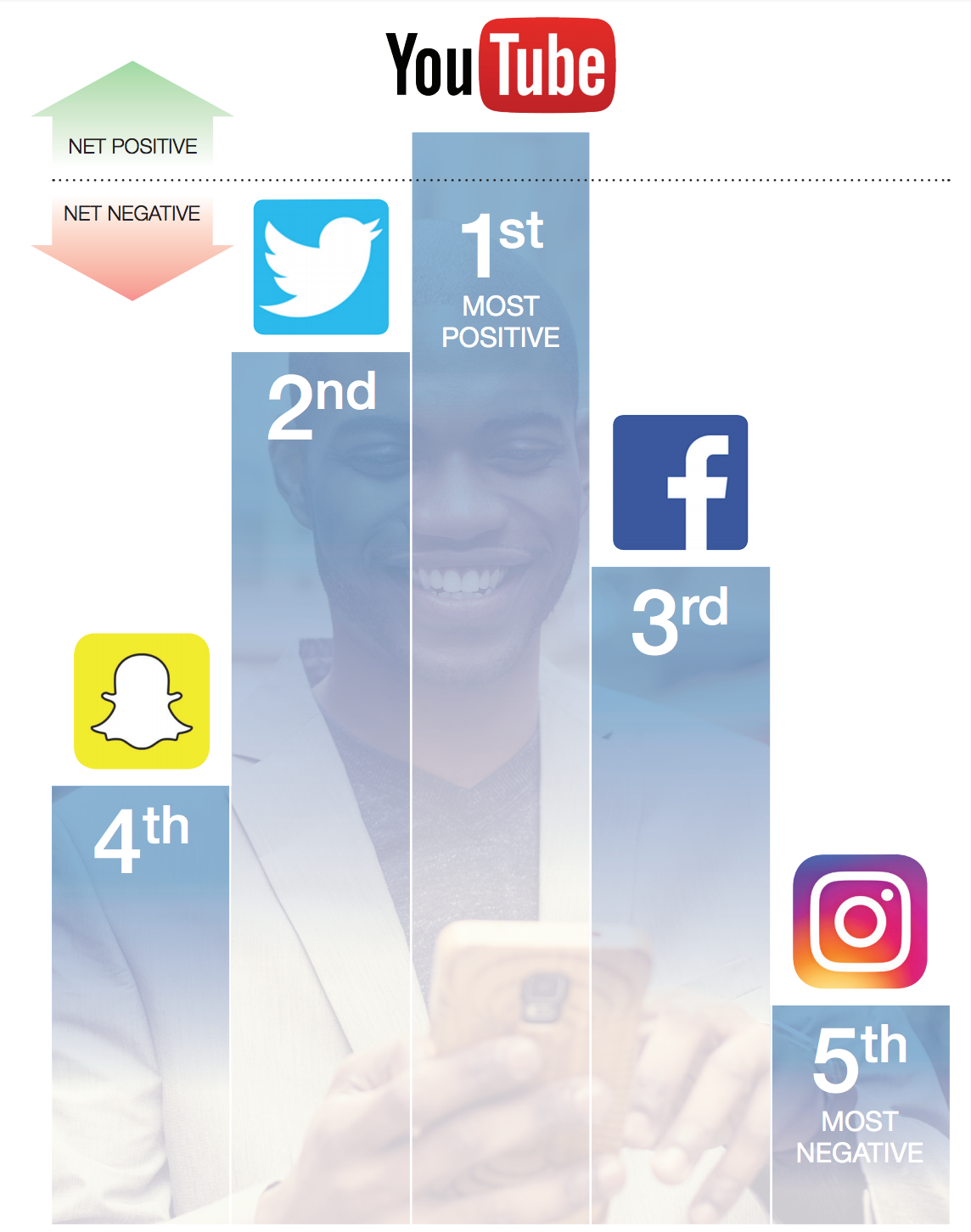
There is a lot of discussion about Mental Health and social media because most people are not social media natives. They are either Luddites who do not appreciate playing with technology. They see themselves as users rather than participants and then there are extroverts and other people who see Social Media as a threat to their way of life. We live in societies built for extroverts rather than textroverts. As a textroverts social media is a place for me to have full conversations without having to compete with extroverts who often hijack conversations through charisma and the superficiality of what they have to say. The Royal Society for public health wrote a paper on the topic [caption id=“attachment_3508” align=“aligncenter” width=“770”]instagram graphic Instagram is bad ;-)[/caption] It’s amusing that Instagram is theoretically the worst social app because if people use it like me then they would share their hikes, their climbs and their adventures. These would lead to FoMO and a feeling of solitude if people were motivated to do the same activities as me but unable to. Anxiety, body image, depression and bullying are all consequences of how marketers have encouraged people to use instagram. When brands and social media “personalities” post certain images and when brands promote certain behaviours then they encourage people to idealise the wrong things. They encourage superficiality rather than genuine interactions. It should be highlighted that a lot of people use Instagram for selfies and this leads people to compare themselves to others. If they photograph food, sports, mountains, seasides and more the negative aspects highlighted above would vanish. [caption id=“attachment_3509” align=“aligncenter” width=“807”]Ranking social media Ranking social media[/caption] It’s amusing that Youtube is the highest and most positively ranked social medium because it is the one that my generation see as having the most negative comments. We often joke that youtube is fine until you read the comments. It’s good that people like Twitter and Facebook because twitter is great for getting to know people and Facebook is a useful way of staying in touch with friends when we travel and move around for work and university. The Royal Society for Public Health came out with a few recommendations:

Brainless television and the Tabloid Media

I saw the headline to this article and feel that we should discuss brainless television and the tabloid media. The article was written by a fifty year old who blames the number of distractions for voter apathy. The answer, I fear, is they’re too busy being mesmerised by an ever-increasing plethora of high-tech distractions directed specifically at them. The changing nature of the youth-obsessed entertainment industry is in danger of inadvertently creating a race apart, an entire generation that instinctively prefers the cyber world to the real world. Rather than blame the youth of today and technology for the situation that Brexit England is currently in I would look at where people got their anti-European rhetoric from. They got it from decades of anti-European articles in the tabloids. They got it from decades of Anti-European Tory rhetoric and they got it from radio and the sides of buses. Even the Guardian and the BBC are guilty of consistent anti-European rhetoric. Just look at the amount of airtime given to MLP rather than Macron. In a recent feature Katya Adler gave minutes to the far right and seconds to pro-europeans. The same is happening during the French election. In times gone by, the 18-24s tended to feel alienated by mainstream entertainment that wasn’t for them. The counter culture flourished because there wasn’t enough for young people to do. The atmosphere was ripe for passionate anti-establishment politics. Now, with global corporations focussing all their efforts on capturing the lucrative youth demographic, there’s way too much for young people to do. The poor things barely have time to think. I was both a teenager and a twenty something year old in the Internet age and I can say with certainty that the counter culture has not suffered as a consequence of new technology. I would point to youtubers, snapchatters and others as examples of this. I would point at Anonymous and other groups as well. I would point to the various critical mass events and more. Footage I took of a Silent Disco flash mob was used in an ARTE documentary about the walk man. Counter culture is alive and well. It’s just a matter of using the right medium. It’s easy to blame the youth for apathy and it’s easy to say “A more likely scenario is that the vast majority of these allegedly pro-EU teens would not have made it to the polling booth” but maybe if the older generations had not been indoctrinated by years of Anti-European rhetoric they would not have voted the way they voted. The reason that young voters are pro-European is simple. They haven’t spent decades reading anti-European propaganda so they understand the benefits of Europe. Online culture contributes to this.

Travel and data roaming

In July Roaming will be a bad memory for Europeans travelling within Europe. As a result of this the sale of sim cards to Ingress players, pokemon Go players and others will also be a thing of the past. What will not change is that we use social media apps to communicate with other people. As a consequence of this use we see local adverts. At the moment I am in Spain and see Google España rather than Google Switzerland. I see Spanish adverts. Local and national products are advertised to me as I browse. As Google, Facebook, Twitter and other companies know of my interests when I am in Switzerland they can extrapolate them to local businesses in Spain. Diving, climbing and other companies would benefit from me seeing their offers. if I have just a gigabyte of data then I need to throttle many of these apps. I don’t want self loading videos and other content. I want a minimum of content to make that gigabyte of data to last until I get on the plane. Advertisers suffer because as I reduce my normal browsing habits it reduces their chance of being seen. In my opinion telecom operators and advertisers should collaborate together to make it cheaper for travellers to use their smartphones. Advertisers should buy data from telecom operators so that travellers are more inclined to use their phones. Businesses will benefit from us posting to and browsing from Instagram, Swarm, Google Local Guides, Trip advisor and many other services. Everyone benefits from cheaper roaming. At the moment businesses with free wifi are helping people see more adverts. With cheaper roaming globally a receptive audience will see more adverts hence providing them with more ideas and inspiration for activities during their stay in an unfamiliar place. Advertisers and businesses should capitalise on this potential audience.

The Paradox of "kicking smartphone addictions".

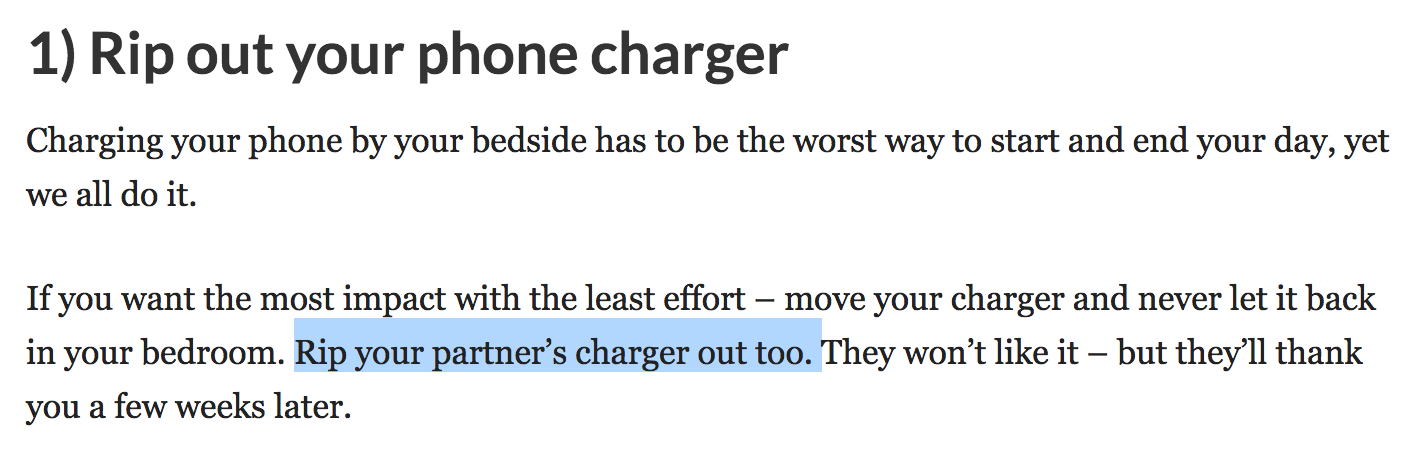
It’s amusing that people think of “kicking smartphone addictions”. We now have a decade of experience in the current social media landscape. We have a decade of using smartphones rather than feature phones. In effect we have had a decade to adapt our lives to the age of the ubiquitous smartphone. We can ignore the Blackberry and Nokia ages where phones were for phone calls, playing snake and business rather than pleasure. [caption id=“attachment_3418” align=“aligncenter” width=“300”]Those that see social media as a disease usually have partners. Those that see social media as a disease usually have partners.[/caption] People who see smartphones or social media as addictive usually have one thing in common. They have a “partner”. They spend their free time with a specific individual. “It’s about finding balance. I became conscious of what matters to me, in my life. My smartphone is still a part of it, but it’s no longer the boss.” I have never been addicted to the device as such. My passions lie with what I can do with the device. I was passionate about Twitter when it was a social network. I was passionate about facebook when it was a way of keeping up with friends. If Twitter and facebook become ego-networks for marketers and public relations professionals then the “addictive” aspect of smartphones vanishes. As social media goes from a conversation to a broadcast and a monologue it delivers another opportunity. It gives us the chance to go back to reading books. As we no longer “socialise” with smartphones the “addiction” is gone. We loose nothing by spending time “offline”. You don’t need to give up the smartphone or any apps. If you’re like me you can pick up an e-book reader and replace Facebook and twitter with reading. If you’re going to passively read an e-book reader is an interesting alternative.

The Gopro Hero 5 karma advert is aspirational

I love sports and I love the outdoors. I really like snowboarding when the conditions are good and when there are few people. I love to climb, to hike and to do via ferrata. Last year during a film festival I was invited to try Paragliding for free and the flight lasted 45 minutes. In light of this you can see why the Gopro Hero 5+ karma above is so fun for me to watch. It’s not that I want a gopro camera. I’ve had at least two of their devices and except for filming two or three dives and two or three via ferrata the cameras have stayed in drawers or boxes. GoPro show adventures and experiencers that I aspire to. For this reason we want to watch these edits. We enjoy these edits. Modern film making does away with cranes, jibs and tripods replacing them with drones and devices like the Karma Grip. If you look at the adverts you see that video production has shifted from being a profession to a pass time. At the time of writing the Grip costs about 350 CHF and the drone has not been priced. GoPro is competing directly with DJI and their product line. With systems like GoPro and DJI are providing the term prosumer evolves. Thrill seekers and adventurers get to play with technology that they can afford to buy and use during their trips or weekend adventures. With this technology fixed cameras are a thing of the past. The camera moves with the action. In practice the camera operator doesn’t need to be an athlete to get in position to get the shot. Assistants are no longer required to carry heavy gear. You carry everything in a bag on your back and it’s ready to use within a short amount of time.

On the rise of disinformation through the dumbing down of Social Media

For years I have been complaining that social media has shifted away from conversations towards marketing. It has shifted away from peer to peer conversations towards a broadcast model where crowds listen to and share individual sources rather than interact within a social network. As a result of this communication shift people re-share content rather than create their own. Until the election of Trump and Brexit it was unpleasant but had to be seen as part of modern life. We had to accept that sensationalism and dumbed down content were popular. We had to accept that most people saw social media as RSS rather than conversation. Within the last year we have seen that the shift from social media being conversational has shifted towards trolling, disinformation and misinformation. We see that people speak about living in a “post truth” age and more. In such an environment we see that people hear what they want to hear and vote for what they idealise rather than what makes logical sense. Brexit and Trump are consequences of people following idealism rather than realism. In such an intellectual environment social media, rather than encouraging the flow of information and context has had the opposite effect. When Obama was running for President the blogosphere was seen as a gate keeper, as part of the fourth estate, as part of the checks and balances. With Trump and Brexit we see that the Tabloid press in England and Troll armies in other countries have deliberately misguided people, deliberately made them vote against their own self-interests. For years I saw the web as a place to socialise and make new friends but within the last year, with troll armies, marketing and more I see that conversations are declining. The Return on Investment that I used to enjoy as a human rather than a marketer justified the time I spent socialising via social media. In 2016 the Return on Investment of using Social Media became negative. I watched youtube series, I read books, I read mainstream media, I listened to podcasts. In 2017 I want to replace the time that I spent on social media on reading books. In this day and age the cost of social media exceeds the potential return on investment. I finally find that social media is a waste of time. It took a decade for me to fall out of love with social media.
Black Mirror - A television series

Black Mirror - a television series Black Mirror is a television series that was broadcast by Channel 4 a few years ago and made available to Netflix audiences recently. The series explores a variety of topics and issues to do with technology from death to crime and existentialism. It also explores themes like family and friendship. We spend a lot of time thinking about technology and how it has changed our lives. Sometimes it’s fun to watch 80s series to see the world as it was before computers and the internet and sometimes it is fun to watch dystopian essays or short stories exploring facets of modern life. In modern society we see that social media is affecting the discourse that is taking place between politicians and normal people. We see how social media and the lowering of the barriers of entry to the fourth estate have created a golden age for propaganda and disinformation. We see in The Waldo Moment that a CGI bear can mock the political system. It could be directly related to what we have seen happen recently. Be Right Back deals with online identity and how a person can be emulated once they have died. The question is an interesting one. The more active we are on social media the more our character and personality can be understood and reflected back. This is limited. We are not entirely ourselves online. There are some things that we hide from the online world. In Fifteen Million Merits we see a dystopian vision of the world where everyone lives in a small dark room. They get out of this room to go and peddle for a few hours to get Merits. Once they have 15 million merits they can “apply” for a different kind of job via a talent show. Nosedive explores popularity and social networks. Everyone is constantly being rated based on what they share, how they interact with others and more. In such a dystopia people can progress or lose privileges based on reputation. In such a reality people are vulnerable. A vertovian theme is explored in “The Entire history of You”. An implant called the Grain records your entire life and you have the ability to fast forward and rewind moments of your life. In so doing you can analyse what went well, what went badly and more. You can also see more than you were intended to see through other peoples’ recorded experiences. In this episode we see the Kino-Eye, the all seeing eye. Your life is no longer private. I like some of the themes that are explored in this series and I recommend people to watch at least some of the episodes. I feel that they are relevant to our discussion about social media and online lives.

The Selfie Stick cutter

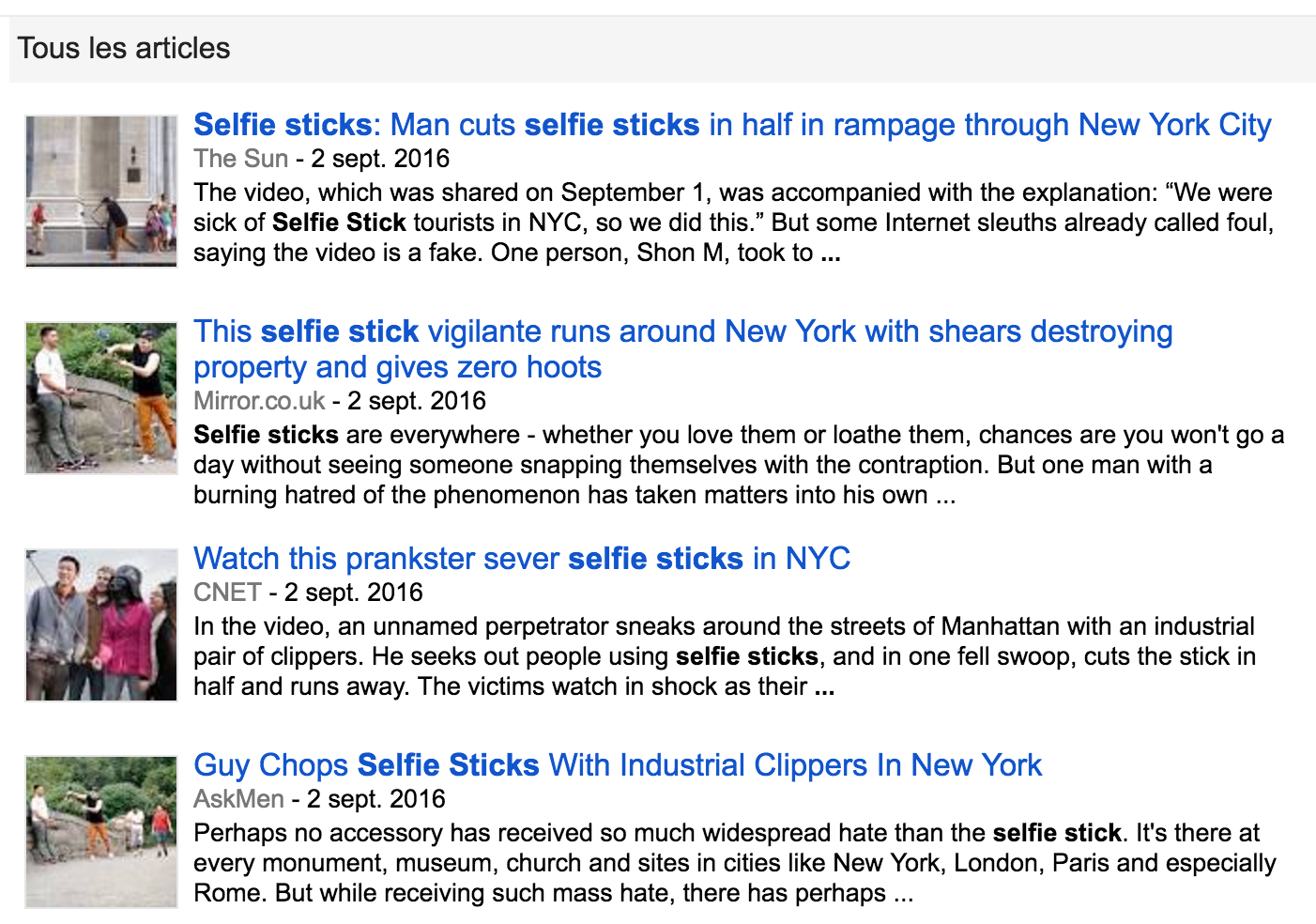
In some cities you see a strange set of creatures and the selfie stick cutter is there to resolve this issue. People carry long poles at the end of which they stick their camera. They look at the phone held at a safe distance and smile, do victory symbols and other such gestures. These sticks would be really interesting if they were used to provide people with interesting images. Instead they are used to take pictures in interesting places with ordinary people in front. As a camera operator I photograph landscapes or monuments. It is an old fashioned habit. The selfie stick is so endemic to some parts of the world by now that pranksters run around and cut people’s selfie sticks with the phone still attached. You can watch as dozens of phones fall to the ground in this video. Mobile phone repair shops must really enjoy watching this video. Look at all the work they will soon have. I think that this video is meant to be seen as a joke but can you imagine how much anger such an action would generate. Can you imagine how fast you would have to run away from some of these people. You see these people look surprised and in some cases betrayed. They have a quarter of a million views so far and it will grow from tomorrow onwards, as people in offices share the video with their friends and colleagues. Maybe by next week it will have more than a million views. Selfie sticks are popular and so are pranks. With the money they could make from monetising this video they could compensate the people whose screens they broke. [caption id=“attachment_3349” align=“aligncenter” width=“300”]The story is not viral yet The story is not viral yet[/caption] Selfie sticks do have one practical purpose. You can fix 360 cameras to them and take pictures without the giant index finger getting in the way. That is how I use one. You can get them for cheap from certain types of shops. You do not need to spend 29 euros.