Garmin

Spring Cycling

The weather is relatively cold but the sun is out so the time for spring cycling has come. Spring cycling is like other forms of cycling, but you want to dress warm enough to be comfortable, but not so warm as to overheat. You also want to find routes that are short enough so that if it is cold you can get home without being cold for too long.

The conditions were mild today. The thermometer showed about 12°c so acceptable for cycling. For years I was cycling with Suunto devices but now I am playing with the Garmin instinct and the Garmin Speed Sensor 2 and Cadence sensor. I switched over to the Garmin Instinct Solar because I am curious to see how it copes this summer, and I got the speed sensor 2 and cadence sensor 2 because the Suunto device has finally failed, and I saw them offered at a good price so I decided to test them. So far I haven’t had to worry about them. They just work, no need to make sure the sensors are in the right place or anything else.

Reading About Hiking While Charging A Watch

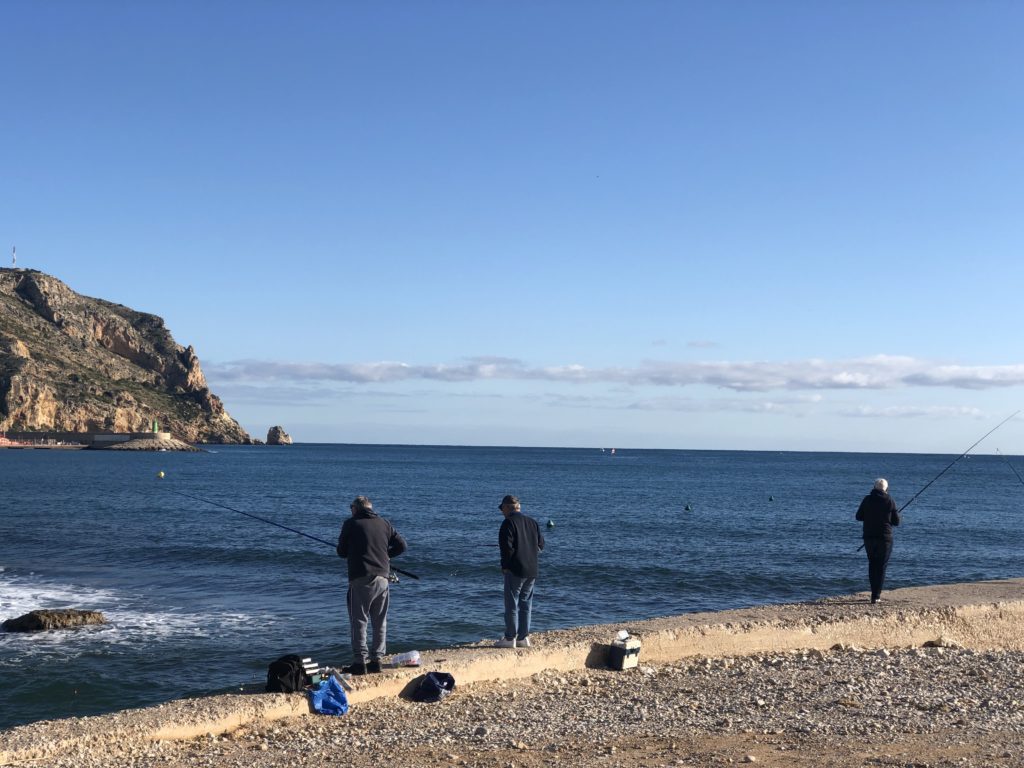
People Fishing.

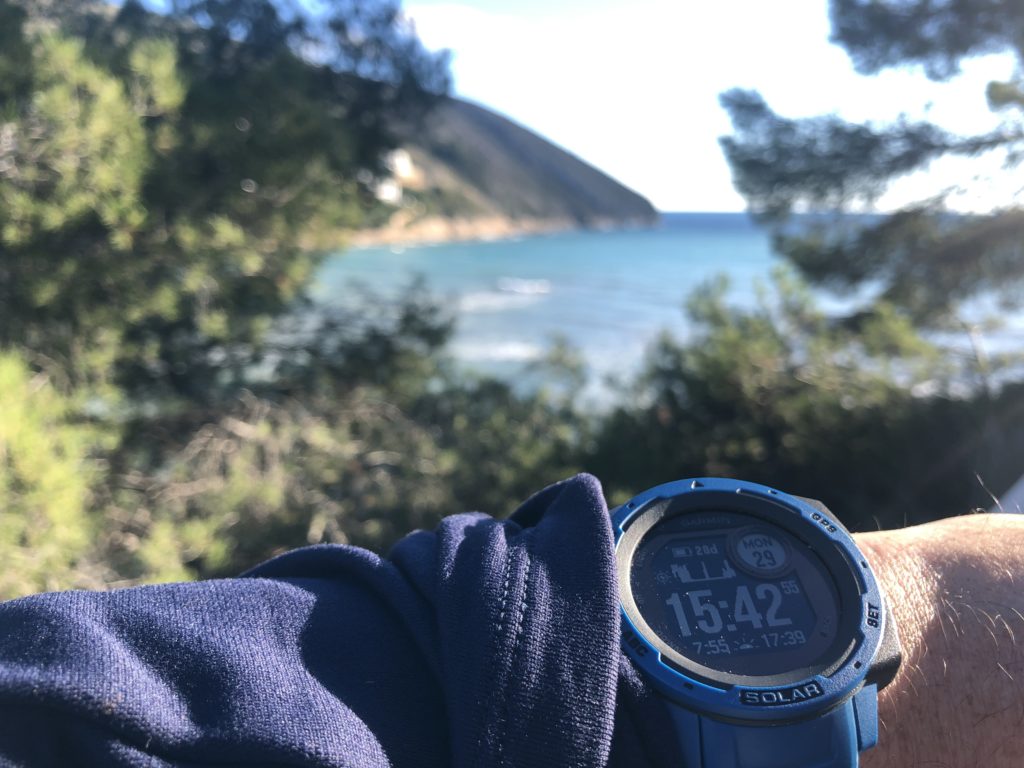
Today I sat in the sun to charge my watch. I kept my left wrist facing the sun. My right wrist was employed in keeping a kindle in place, reading.

My goal was to get the watch to go up by one day of charge and it worked. I wouldn’t sit in the sun to get a tan, but I would to charge a device. I didn’t time how long it took to charge but it wasn’t more than half an hour. In the middle of summer, in the right mode, I could easily see this watch charging a few percent a day in the right conditions. With the right combination you could get this watch to be autonomous.

A Solar Powered Watch in Spain

A solar powered watch in Spain

If you were a solar powered watch would you prefer sunny Switzerland or sunny Spain? Luckily my watch has now tried both. The watch likes that you walk with your watch wrist facing the sun and the wrist without a watch to be on the shady side.

I know this is not an ordinary thing to think about but it is key to having a watch charge as you wear it. So are your sleeves. If your sleeves cover the watch then it will not charge either. There is even a sleeve mode for these watches. It tries to save power.

The Garmin Instinct Solar And Activity Tracking

For two days I have played with the Garmin Instinct Solar and I already see a niche for it. If I want to be like every other reviewer I will say, “use the expedition mode for up to 127 days or hours of battery life, but I won’t because I think there is another more interesting niche. Activity tracking, without needing to take off the watch for weeks or months at a time. With Suunto, Apple and other devices you need to remove a watch at least every three or four days to recharge it, which means that you have a gap in heartrate and activity data.

Taking a Break From The Apple Watch

Yesterday I decided to take a break from the Apple watch for up to a week. I am tired of two behaviours. The first of these is the watch’s habit of saying that I did not stand for two or three hours in a row. I know that I have. I need to stand to cook, or to brush my teeth and other tasks. It also annoys me that if you bend your arm it counts that you sat down. Bend your arm to check if you have been standing for at least one minute and it resets the counter.

Thoughts on the Garmin Vivosmart 4

The Garmin Vivosmart 4 is the first activity tracker that I see tracking descent as well as ascent. It is yet another fitness tracker and in theory I had no need for it as my Suunto Spartan Wrist HR Baro and my Apple Watch Series 4 do almost the same thing.

I was curious to play with this device for two principle reasons. The first of these is the body battery functionality that looks at the energy we use during the day and the sleep we get at night to say whether we need a rest day or not and because I wanted to fill the daily activity metrics in the Garmin connect app.

The Apple Watch does not fill a niche

The Apple Watch rather than fill a niche provides a fifth screen. According to Wikipedia the four first screens are the cinema screen, the television screen and the mobile phone and tablet screen. The fifth screen is the smart watch as designed by Apple, Samsung, Sony and others. Apple and others have designed phones that bring the mobile phone experience to the wrist. Energy efficient Suunto, Garmin, Fitbit and other brands fill the wrist worn niche effectively because they have designed devices with energy efficient displays that provide tracking whilst at the same time giving extended battery life. Extended battery life in use Health trackers by fitbit and other companies have been designed to last for a week or more whilst tracking movement 24 hours a day. Suunto, Garmin and other brands have designed watches that can track activities for hours or even days before they need charging. Long stand by time When not in use all of the devices mentioned above can last for weeks. In the case of the Suunto Ambit two I have found that it loses one percentage of charge per day. As a result of this it can be used as a watch for three months before I need to think of charging. Data analysis All of these tools are for collecting data about the route you took, the intensity of the exercise tracked, heart rate and complementary information. When synced on the computer or website a lot of information is presented. Garmin syncs with Runkeeper, Strava, Garmin connect and other services, Suunto syncs with Movescount and Strava intuitively. Fitbit syncs with the fitbit site and other fitness apps. The most interesting data is analysed on a computer rather than the wrist unit. This leaves the device to track information cost effectively, where cost is battery life, and effective is defined by how long you can track an activity. Conclusion: My passion for “smart watches” stems from scuba diving. I bought a Suunto D9 to track dives and loved taking dive data and analysing it in view of improving my diving ability. I tracked training at the gym, hiking and other activities with various phones and their weakness was battery life. When you go for a hike in the mountains, go for a via ferrata or do a number of other sporting activities for extended periods of time you want a device that can last as long as you do. Suunto’s Ambit 2 filled that need very well, so well that I upgraded to the Suunto Ambit 3. As an android user I can’t  take advantage of all the features yet but that will come soon, this month in fact. The Apple Watch does not fill any of the requirements I have listed above and for this reason I am not tempted. I see it as a fifth screen that does not fill a niche. Fitness trackers, fitness watches and other devices cost the same price or less and fill niche requirements effectively. Why would I want a gimmick?
Guided by the Nüvi 250

Finding your way around London is hard and after seven or more hours of driving across France from Geneva it can be a little daunting. That’s why I decided to use the Garmin Nüvi 250 to help me. It’s a small pocketable driving GPS that’s easy and intuitive to use. That’s important when you’re on the road. It’s got a small display and there are two main functions. Where do you want to go and the map. The map is either 3d or 2d depending on your preference. With the unit I bought you have 22 European countries including France, England and Switzerland. Those are the three countries I would travel through. The navigation is easy to setup. Select your destination and it will quickly trace a route of where to go. You have the ability to review the points one by one or trust the GPS to get you where you want to go. It’s got a battery life of 5hrs but included with the unit is the car adaptor so that you can power it during the trip.Easy to use and a great driving aid. It made driving through London a relaxed, stress free experience, at least on the way in. On the way out there were traffic jams which this unit did not warn me about. It’s a nice unit, not too expensive but frees up your mind for other things than trying to find your way. It’s a great little help.Â