Tech Related

The Immersive Video Experience

  I was at the World Virtual Reality Forum in Crans Montana this weekend as a volunteer. During this time I was able to try many of the demonstrations and get a real feel for the potential of 360° and immersive videos. I was also able to listen to people comment on what they appreciated about the experiences and what they did not like.

Vulkane in 3D und 360

One of my favourite experiences was Vulkane in 3D und 360. I worked at this exhibit two out of the three days helping two people at a time every three minutes experience this. I had watched a number of videos before this one and when I watched this one I said Wow because the experience was so beautiful. The quality is excellent and there are some vistas that are spectacular. We are familiar with watching volcanic eruptions but with this experience we are watching the scene as if we are there. As the volcano erupts we can see the projectiles and follow their course through the sky. This is a novel experience for many of us.

The High Tech World is not making us weak and weird.

The High Tech world is not making us weak and weird. I believe that the opposite is true. According to Patrick Mustain in his article “Welcome to the Devolution: The High-Tech World Is Making Us Weak and Weird” for The Daily Beast he worries that modern technology and conveniences have taken the physical aspects out of our daily routine. We don’t need to clean clothes by beating them against a rock and we no longer need to clean dishes manually. We take the car from point A to point B and we take a lift to go up a floor or two.

Self Driving Cars will teach us How to Drive

I am impatient to try a self driving car. I am impatient for the day when the car will know where we’re meant to be and at what time. That is when cars will be autonomous. In this future I envision that self driving cars will teach us how to drive. For the moment learning to drive a car is problematic because you need fuel, you need a car and you need someone trusting enough to put their life and car in your hands. You also need to find enough money to pay for a driving instructor to teach you how to drive. These are seen as barriers. People say that they would like to learn but that lessons are too expensive. Self driving cars that teach us to drive are the solution. Cars are driving themselves around California and self driving truck convoys are driving around Europe. As these cars drive and provide data for algorithms, and as exceptions are found so the algorithm is tweaked. We remember the story of the Google car confused by a track standing cyclist and by the Google car that was crashed in to by a human driven bus. When the bugs have been ironed out, when the challenges have been overcome I visualise a future in which we will choose whether we want to use our phones to read the news or socialise or whether we want to drive the car. In this future the car will be advanced enough to teach its passenger/driver to drive. Cars already provide drivers with a lot of assistance. Breaking assist, automatic windscreen wipers, parking sensors, automatic gear box, cruise control, parking assist and speed limiters are already familiar. The car is “teaching” us to be better drivers, or at least assisting. The next step is for cars to teach us to steer and situate the car on the road. It could warn us if we are too far to the left, too far to the right, if we are below the speed limit and creating a traffic jam or driving too fast for the road conditions ahead. At a roundabout it could remind us to indicate our intentions both when entering and leaving. It could also assist with parallel parking, backing in to a parking and more. Once the basics have been learned we could also envision cars teaching us to drive with a trailer or caravan. Software could be written to help people negotiate bends properly, place the caravan properly in a parking and more. Driving assist can be as complete or as passive as we want. I would like to see how self driving cars would cope with mountain roads. It would be fun to get them to go up narrow roads with traffic and teach them to get around easily. It would also be interesting to develop a behaviour which the car knows will minimise motion sickness for people not used to mountain roads. Weather and climate affect driving ease. Cars have sensors that are optimised for driving in good weather. When cars meet, rain, snow or other conditions they may get confused by reflections or obscured road signs. Humans should be able to take over in these conditions. We have to see whether cars or people are better suited to drive in fog. In theory cars have technology that should help them see through fog so it should be safer handing control to the machine. When autonomous cars are ubiquitous and self reliant the shift will move away from humans teaching machines how to drive. Machines will teach humans how to drive instead. In theory there should be no need for humans to drive cars anymore. Redundancy is good.
Virtual Reality Advertising

At this moment in time Virtual Reality is an abstract notion for most people. It is easy to find news features and documentaries speaking about the potential of the medium. The video above is the most effective demonstration of Virtual Reality that I have seen so far. I like that they use a greenscreen to key in the environment that the guinea pigs are in. We are immersed in to the reality that they are seeing. It demonstrates not only the games and environments you could find yourself in but how it is a communal rather than solitary experience. This advert removes some of the stigma of virtual reality. From the 6th of May to the 8th of May 2016 a meeting will take place in Crans Montana Switzerland. It has the title of World Virtual Reality Forum.  “The World VR Forum is dedicated to advancing the virtual reality industry and culture.” Artists, documentary makers, news producers, architects, surgeons and an ever-expanding group of people will benefit from this technology. The video above helps us understand the intricacies of using something as simple as two hand held controllers. In two to three months the Music festival season will start with Caribana, Montreux Jazz, Paléo Festival and many other music festivals. During these events media outlets and artists love to give interviews to journalists to drive interest in their upcoming performance. For now we usually have two or more cameras. In some cases you have one wide shot of the room or the artists and the second camera is a close up of the artist as he speaks. This summer I expect that we will watch interviews in 360° video where we can turn and see the journalist asking questions and turn to face the artist when he answers. When a group of artists are interviewed you will be able to watch the antics whilst listening to what they are saying. You will watch the artists and the journalists smile and laugh. When I think of VR goggles I do not think so much about gaming as I think about documentary and television production. I like to think about how it could provide new opportunities for content producers to create interesting and immersive video content. “Their headsets were connected with the school campus more than 900 miles away in Okinawa, where the school’s headmaster spoke. The students were also treated to a 360 degree view of the campus inside the augmented reality.” (source) Google Streetview could provide live 360° vision of specific squares, St Marco in Venice, Notre Dame in Paris, St Peter’s in Rome or the market Square in Wroclaw. Imagine Google Street view when wearing a VR headset. VR headsets are being offered by a number of brands for all mobile phones and the number of cameras able to provide 360° video are growing in number. As both of these democratise the market so content creators will have more customers and more incentive to produce relevant content.

Virtual Reality Goggles and multicamera Production

I have worked with video cameras, from hi8 to MiniDV, Beta SP, SX, DVCAM, XDCAM, AVCHD and other formats. Cameras have grown and shrunk, controls have changed from manual to partially automated to fully automated. Television news and Studio camera productions have gone from three or four camera operators to needing a couple and then a single camera operator sitting in a side room with controls for all three cameras. Crane and jib moves are programmed so that the same action is performed at the start of each news program. Virtual Reality technology and Virtual reality headsets are going down in price. Apps provide mobile phone users with 360° videos in normal vision and 3D. The technology we use to watch 360° content and immerse ourselves in the VR world could be adapted and made suitable for multi-camera production. It would be nice for software to be written that moves the camera as we move our heads. This technology is already used by gunners flying in Apache helicopters. The point would be to adapt this technology to camera operating. I would manual controls for zoom and focus and a control  to lock off the camera once the desired shot is ready. Imagine how much simpler controlling drone and crane cameras would be. Imagine also how much nicer it will be for conference attendees, concert goers and UN delegates if a smaller remote controlled camera could be used. Camera operators often obscure people’s view. This technology would be less intrusive. Camera operators could sit rather than stand for hours at a time, barely able to move. VR goggles and the technology they contain should not be used just to consume a finished product but should instead be used as a creative/production tool. VR goggles and related tech could be used to simplify people’s work, to make it more intuitive. Multicamera production with VR goggles would reduce costs and make high-quality video coverage achievable even for modest budgets. The excuse for using a single webcam to Livestream an event will be gone making virtual attendance of events more enjoyable.

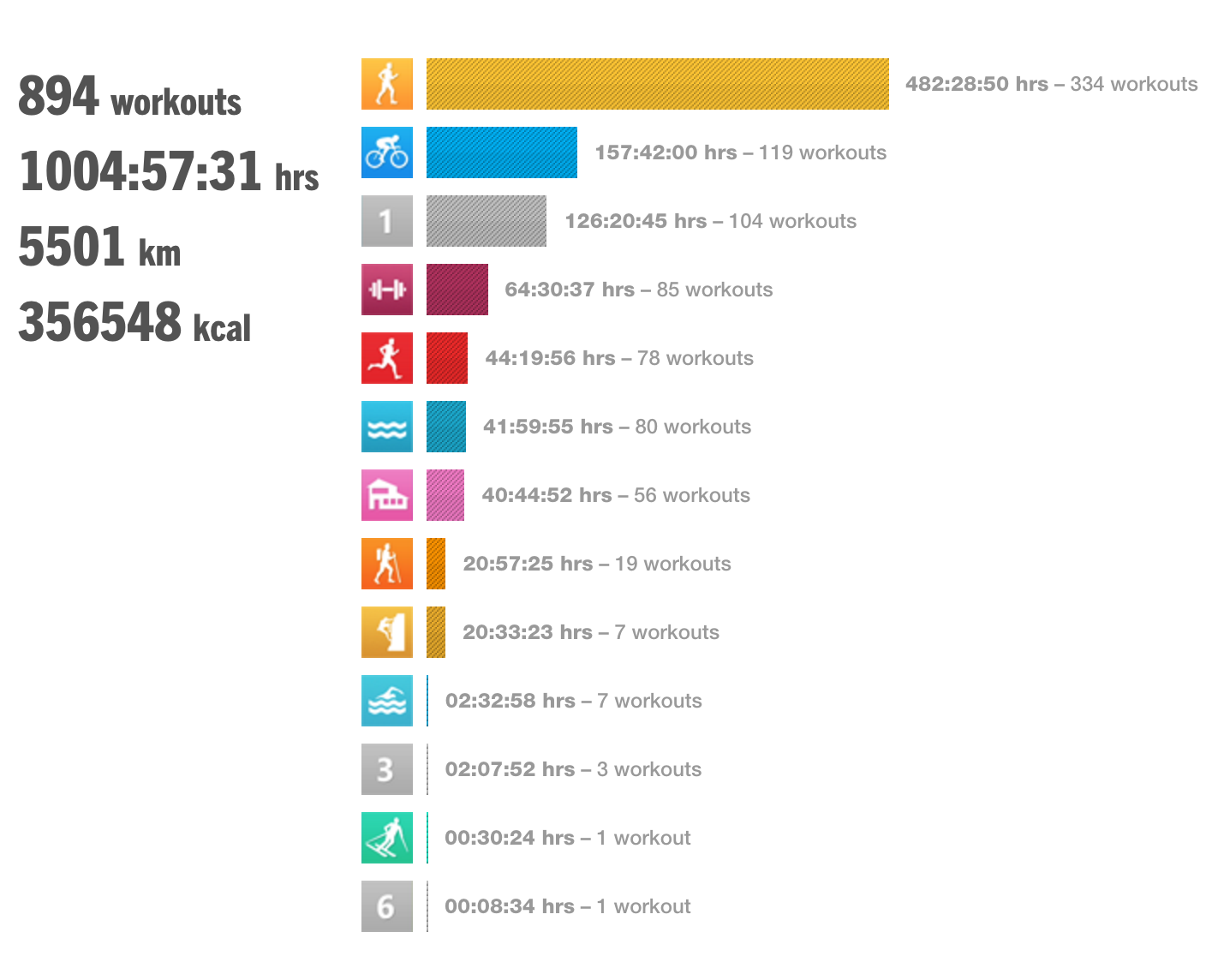
Sports tracker: 1004 hours tracked across multiple devices over the years.

For years now I have been tracking my sports activities with sports tracker on a variety of mobile phones, dive computers and sports tracking watches. I have gone canyoning, hiking, swimming, skiing, snowboarding, climbing, to do via ferrata, explored caves and trained indoors. In that time I have not had too many injuries and I have taken hundreds, if not thousands of photographs. [caption id=“attachment_2809” align=“aligncenter” width=“300”]1000hrs with sports tracker I have tracked more than 1000 hours[/caption] These activities have been in France, Spain, Switzerland, Italy, England, Poland and maybe in or two countries that I have forgotten about. Sports tracking has progressed enormously since I started tracking activities. In the beginning I was using the N95 8gb and the battery lasted for about an hour. I then switched to various iphones and android devices before deciding that mobile phones were crap. That’s when I moved over to the Suunto Ambit 2 and later Suunto Ambit 3 devices. Since then I have been very happy tracking my physical activities. One key step was when Suunto and Sports tracker decided to share data between their services. At this moment I could track with the Suunto Ambit 3 and share to Sports tracker without four or six steps per activity. Since then the service has been reliable.

Pay-to-win Futility.

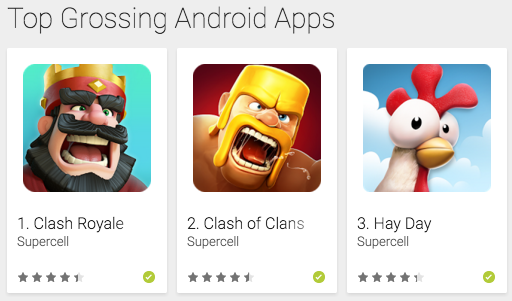
[caption id=“attachment_2795” align=“aligncenter” width=“300”]Pay to Win games make casual gaming futile Pay to Win games make casual gaming futile[/caption] Several years ago a friend told me about Clash of Clans and I began to play the game. The game is an enjoyable distraction for when you have a minute or two three. You perform a few actions and then you get on with your other tasks. When you play for free patience is an asset. You have to wait to get enough gold, elixir or gems before you can complete certain actions. The game is designed in such a way that you can play for years and still progress. I like to joke that the Pay  to Win model is both encouraging and training people to bribe their way through life. If you’re impatient you pay a little supplement and you complete the action. Instead of taking a week for an action to be completed it takes seconds. Supercell has made millions this way as individuals spend more than a thousand euros. Those who are willing to pay get to the top of the leaderboard.

Myshake - Earthquake app for Android

  Myshake is an android app developed by UC Berkeley to use mobile phone sensors as earthquake detection and measurement devices.

When the shaking fits the vibrational profile of an earthquake, the app sends the anonymous information to our central system that confirms the location and magnitude of the quake.

There are more than a billion smartphones currently in use. If everyone with an android mobile phone downloads the app and has it running then hundreds of extra data points can be collected. It will provide seismologists with a much larger and far broader data set. Seismologists will be able to collect such a breadth of data that they will be able to understand what is happening in more detail. They can compare data from a diversity of points, whether on one side of a bridge or the other, from the inside of one building or the other and more. It should help with computer models and provide more insight in how materials are affected by earthquakes.

Bragi - self contained in ear audio player

BRAGI - The Dash – Wireless Smart In Ear Headphones from BRAGI on Vimeo. I enjoy cycling, running, climbing and via Ferrata so this type of device is well suited to my needs. The price is not. At 300 USD it is an iPod shuffle replacement at its core. From what I understand The Dash can track steps, heart rate and duration of sports so in theory you can go without a sports watch, sports tracker or mobile phone. In practice, I never leave the house without my phone. I do see it filling a swimming niche. Most mobile phones are not IP68 certified. If this device is IP 68 certified (I could not find information on the website) then I see it being especially interesting for swimmers. According to their website they can be used for four hours in between charges but charge time is two hours. They will last through most workouts. The limitations I see to this device are first and foremost the price. I don’t want to pay 300 USD for something that I am likely to lose. I listen to podcasts and audio books and like to have several on my devices at all times. Both my mobile phone and iPod classic fill these roles with ease. When the price for these devices descends to 200 USD I will be willing to buy a set. I would also like to have either two sets of earphones or a charge time of just an hour rather than two. They say that the app is coming soon. As an audiobook and podcast listener, I want to save my progress and bookmark interesting passages. I would like to see this incorporated to the gestures that control the device.

Suunto and Sports tracker collaborate.

I have been using sports tracker for years. I first used it on the Nokia N95 8GB several years ago. This was an excellent app that allowed you to track your moves using the mobile phone as a GPS. The limitation of such an app was battery life on mobile phones. The battery usually did not last more than an hour at first and eventually progressed to two hours or more. The first Suunto Device I used was for diving. I used the Suunto D9 dive computer for many months before upgrading. As I satisfied with this device I bought the Suunto Ambit 2 and eventually the Suunto Ambit 3. The reason for buying these watches is battery life. As normal watches they can last for 100 days, losing about one percent a day. If you use them as fitness watches then they easily last for a day or more. When you’re doing via Ferrata, hiking, cycling or doing other sports you want the device you use to track your fitness efforts for as long as you’re going. That’s where Sports trackers and other mobile phones had their weakness. Mobile phone apps sometimes crash. If you’re pushing yourself hard during a workout you do not want to reach the end of a workout with no data. Another frustration I often encountered was with Movescount, Suunto’s social sports app. At the end of quite a few workouts, I was unable to sync my workout data and analyse my progress. At the time, I wanted to see Suunto and Sports tracker combined. They’re both Finnish companies and they both excel at specific tasks. Suunto for the hardware and Sports tracker for the analytics. By combining the two we have the best of both worlds. Communications between Movescount and Sports tracker has been available for several weeks at this point and it works flawlessly. I have hiked, cycled, walked, sailed and climbed and each activity has synced without problems. [gallery ids=“2690,2689,2688”]